“Should I hire an operations manager?”
Maybe not.
The inbox is overflowing, deadlines are constant, and you’re still the one catching the details. The instinct is to think, “If I just find the right person, they’ll clean this up.”
I used to believe an operations manager would save me. Until the third one quit.
Here’s what I’ve seen inside my own company, Gorilla Stationers, and in many others: operations and building are two separate things. Most operations professionals are great at optimizing, but not at building systems from scratch.
If intake happens five different ways, case handoff depends on memory, and no one’s really sure who owns what, most operations managers will struggle. They first need to understand what’s going on, then build a system, and only then can they run it. When they realize it’s not about running but about building, they often leave.
So before hiring someone to run the ship, ask yourself: is the ship built?
And by built, I mean:
• Standardized onboarding
• Clear case handoff
• A follow-up system that doesn’t rely on you at 10 p.m.
These are the things we as founders have to create first. In my experience, maybe one in a hundred operations managers is both good at building and happy to do it.
They’re two different jobs.
Don’t hire an ops lead to figure it out. Build the system first, then hand over the keys.
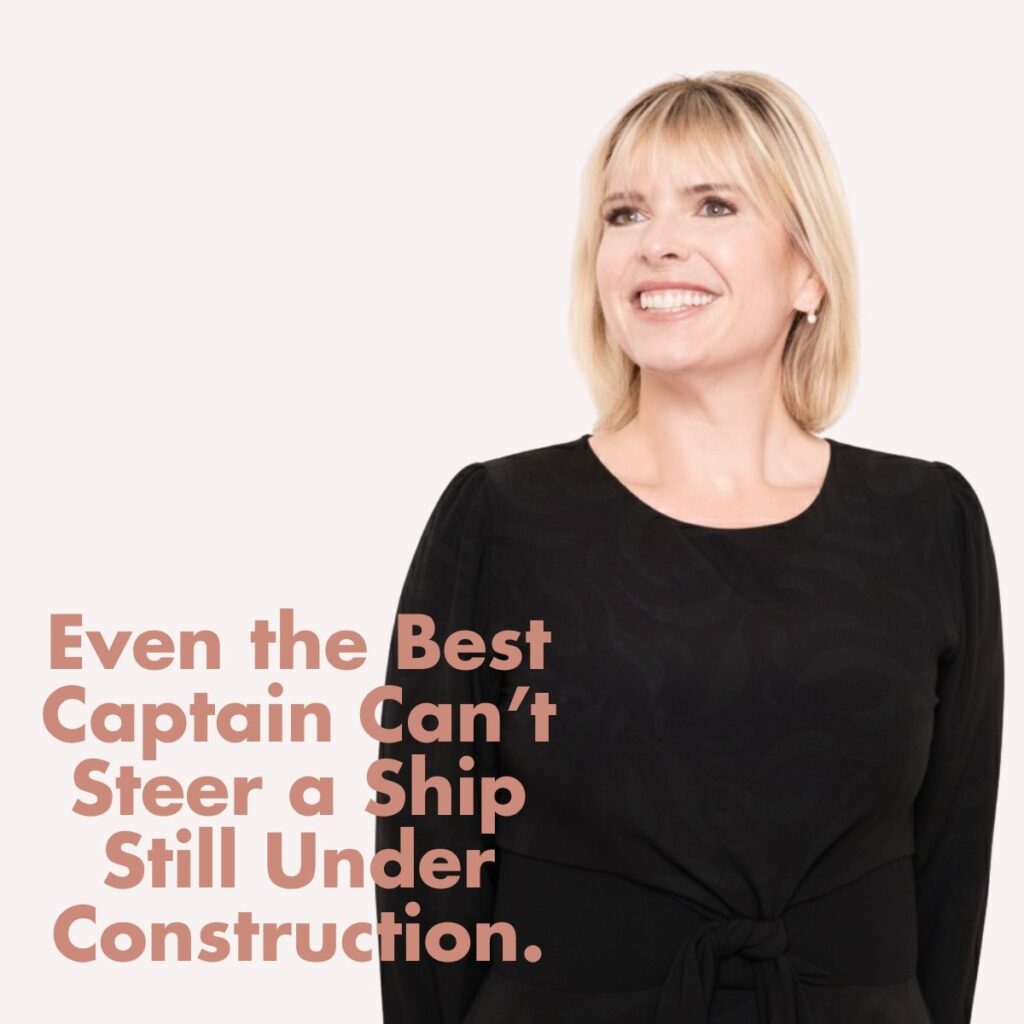
Because even the best captain can’t steer a ship that’s still under construction.
You Might also like
-
Weekly Podcast 2
The Big Oxmox advised her not to do so, because there were thousands of bad Commas, wild Question.
-
Good Intentions Don’t Create Clarity
One of the hardest lessons in leadership is realizing that good intentions don’t translate into good outcomes.
You can care deeply.
You can work hard.
You can want the best for your team.And still create confusion.
I’ve seen leaders get frustrated when people don’t “take ownership,” don’t move fast enough, or don’t seem aligned.
But often, the missing piece isn’t motivation.
It’s orientation.People can’t own what they don’t understand.
They can’t move confidently when the goalposts feel invisible.
They can’t make good decisions without context.Leadership isn’t about being available all the time.
It’s about being intentional with what you communicate.That means saying things like:
This is the priority right now.
This is what success looks like.
This is how decisions will be made.
This is what can wait.When those things stay unsaid, teams fill the gaps with assumptions.
Assumptions turn into hesitation.
Hesitation turns into frustration on both sides.The leaders who scale best aren’t the ones with the loudest voices or the most answers.
They’re the ones who remove ambiguity before it becomes a problem.Clarity doesn’t slow you down.
It speeds everyone else up.If something feels off on your team, pause before fixing people or processes.
Ask yourself:
What might still be unclear?That question alone can change everything.
———————-
I help founders find and manage the right remote talent so their businesses can grow without burning out their teams, or themselves.
Need support that actually works? Send me a direct message.
Post Views: 176 -
Grand Design
The Big Oxmox advised her not to do so, because there were thousands of bad Commas, wild Question.