Think two days away from work is a luxury? I just spent two days with my Forum.
A couple of years ago, the idea of being away from work for two full days seemed ludicrous to me. I thought I had to be in the business always—leading with my sheer presence. Only when I joined Entrepreneurs’ Organization did I realize: if I’m always in my business, I never get to see it clearly from the outside.
Stepping away gives me the clarity I need to lead with focus and passion.
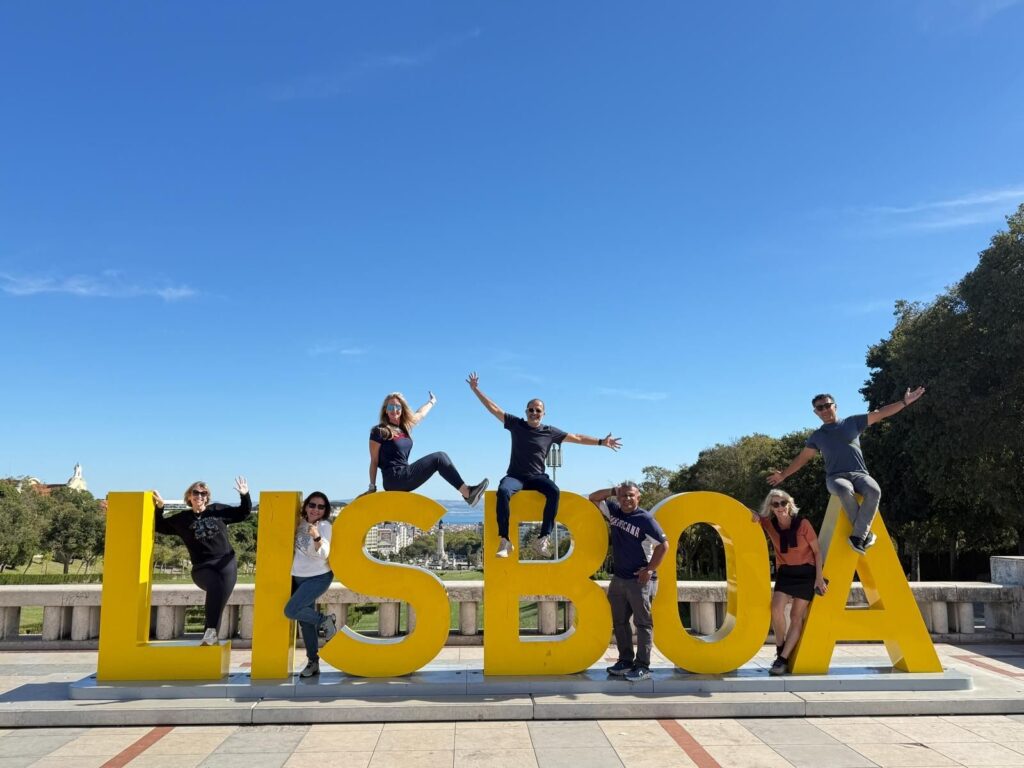
This time, I spent two days with my EO Latin Bridge Forum, a group of business owners from across Latin America.
How does a Bridge Forum work? We meet every few months in a different part of the world to ask ourselves the bigger questions—together and of each other.
And every time I do this, every time I step away from the day-to-day (still with a little hesitation), I discover the same truth:
-
When I slow down, I speed up.
-
When I get clear, I execute faster.
-
When I ask myself “what’s next in life?” I start moving toward what actually matters.
Doing this work together with my Forum mates makes the experience even more powerful. These two days don’t cost me momentum—they give me more of it. Because when I return to my team with clarity, that clarity becomes theirs too.
Grateful for the reflections, the honesty, and the space held by:
Stephanie Camarillo, Ashish Khera, Takeshi Nobuhara, Vinoo Varghese, Jennifer Cohen, Daniel Levy, Alejandra Leon.
So let me ask you: what’s next in life for you?
You Might also like
-
Freedom Doesn’t Come From Growth Alone
Most entrepreneurs start a business for two reasons: they want to do something better, and they want freedom. We build, we push forward, and eventually, we fix the problem. But freedom? That’s harder to reach.
We get caught in the fixing, and we convince ourselves that only if we grow, freedom will come. It took me time, and a few detours, to figure out how to build a business that doesn’t just work, but that works without me in every detail.
Now I focus less on fixing everything and more on building teams that run without me. Because freedom doesn’t come from growth alone. Freedom comes from clarity, structure, and a team that can move the business forward without me.
If you’re stuck in the fixing, maybe it’s time to design a business that frees you, not just feeds you.
Post Views: 939 -
The Real Burnout: Why Leadership Isn’t About Hardening Your Heart
I cried the first time I had to fire someone. I felt it was my fault. As a founder, I’ve always believed we don’t just hire people, we invite them into our vision. We hope they’ll care as much as we do. And when they don’t, or when it doesn’t work, it feels like a personal failure.
For a long time, I kept people too long because I wanted to avoid admitting that failure. Instead, I twisted myself trying to make things work that clearly weren’t. I thought being a “good leader” meant being endlessly patient.
It took me years to understand that being a good leader actually means telling the truth kindly, clearly, and as soon as things become clear.
That’s why I believe most of us don’t burn out from overworking. We burn out from emotional entanglement, from holding the entire relationship on our shoulders, without anyone saying, “Hey, this isn’t working and here’s why.”
It took me years to learn that leadership isn’t about hardening your heart. It’s about keeping it open and acting anyway.
Post Views: 750 -
When Losing a Client Feels Like a Win
I lost a client, and I’m actually happy about it.
Let me explain.
A while back, we placed a fantastic team member with what is now our former client. She did such a great job from day one, showing perfect culture and role fit, that they decided to hire her directly.
Yes, it happens in outsourcing. But here’s what really bothered me: poaching talent doesn’t just break terms. It breaks trust and destroys culture.
I believe the most valuable thing a business owner has is their reputation with clients, suppliers, and teams. Breaking terms sends a signal to that employee and to the rest of the team that shortcuts and small acts of dishonesty are acceptable. In the long run, that erodes trust and damages both the business owner’s and the company’s reputation.
Great cultures are built on respect and integrity.
And if a client shows us they don’t believe in that, then we’re simply not a good fit.Because without values, there is no partnership.
What do you think? Does a little cheating corrode team and company culture?
Post Views: 972