Most job descriptions still look the same: a company bio, a role summary, tasks, requirements, and, on a good day, pay and benefits.
It’s a clear structure and it works for assistant level roles. But for any role that carries ownership, and no founder wants a team without ownership, this structure leaves out the one thing that matters most: outcomes.
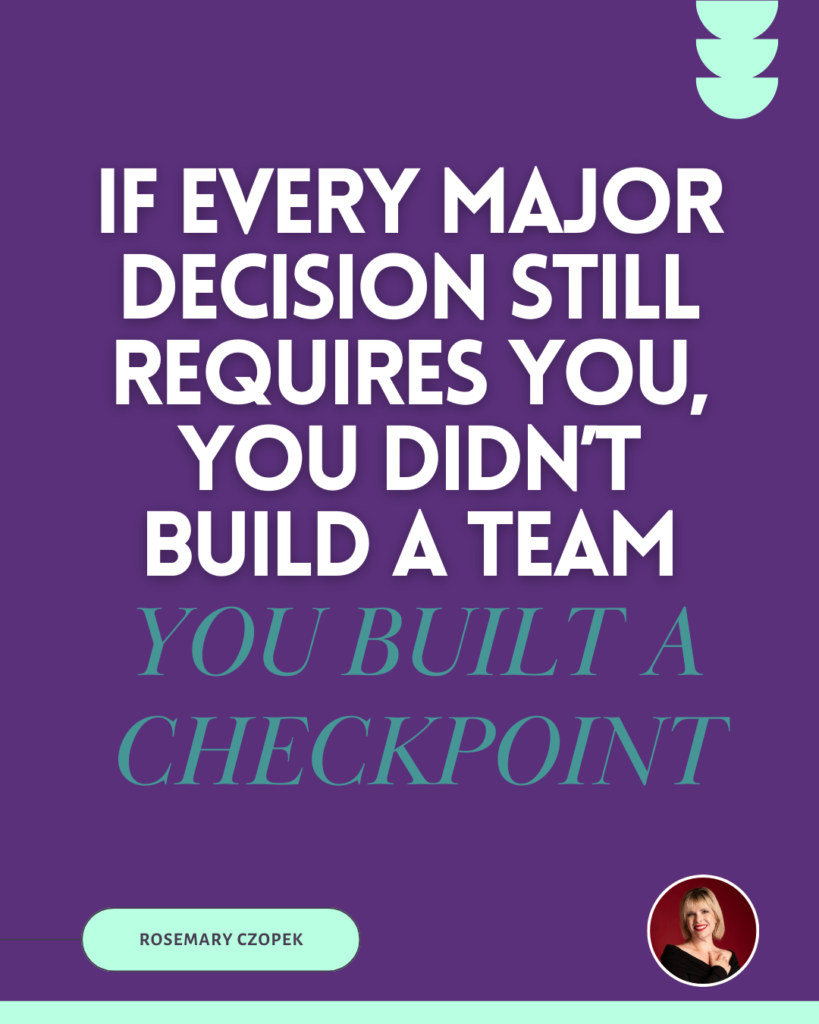
When we hire only with tasks or responsibilities, we unintentionally set the tone for micromanagement. We define the “how” before we’ve even met the person we hope to trust with the role. We position ourselves as the strategists and our team as the doers, skipping the most important part of leadership: defining what success actually looks like.
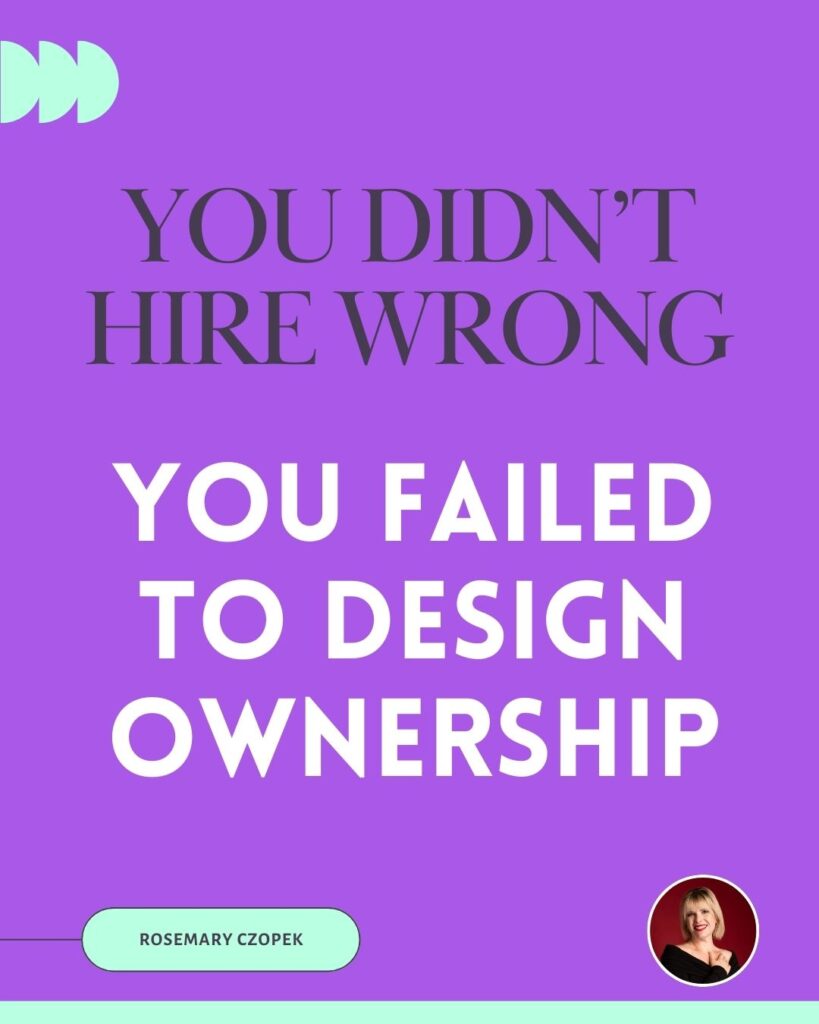
Outcome based hiring changes that. It forces clarity. It attracts candidates who believe they can achieve what is being asked. It creates space for people to bring their own thinking, their own process, and their own ownership.
It is how you build a team that scales without pulling you back into the details.
This doesn’t mean tasks have to disappear because day to day examples help candidates understand the flow of the role. But they should support the outcomes, not replace them.
The balance looks like this: • Be honest about the actions the role requires. • Be even clearer about the results that matter. • And let the right people show you how they will deliver them.
There’s been a lot of talk about how AI is changing outsourcing.I’d like to share what I’m seeing.For years, outsourcing meant sending low-complexity tasks to the cheapest countries:– Data entry. – Basic support. – Repetitive work.The kind of labour that was time consuming, and could be done with little judgment.AI is wiping that model out and the countries that built their economies on routine, high-volume work are feeling it first:– Philippines, – India, and – Bangladesh. And then there are the less prominent outsourcing countries that I believe will now shine more than ever. What countries are those?There are tasks where AI can do 80% of the task, but the remaining 20% require something completely different:– reasoning, – communication, – clarity, and good judgment.And that is exactly where Argentina shines.When I first started working with Argentina, I didn’t know what to expect, and what I found was something AI can’t replace:– creativity, – sharp thinking, and a level of – cultural alignment that makes collaboration effortless.What used to be “outsourcing” has become something different: Smart outsourcing.People who supervise AI, not compete with it. People who can make decisions, solve problems, and communicate clearly and use AI to 10x their output.That’s why I am so excited about the future of Argentina because the people in Buenos Aires, Córdoba, and Rosario are not “cheap talent.” They’re exceptional talent in a world where exceptional matters more than ever.AI is changing outsourcing and as it does that, it’s also revealing something important:The future belongs to countries with judgment, adaptability, and talent density. And Argentina is one of the strongest examples I’ve ever seen.
Founders think meeting a billionaire will chance their business.I met one. What did it change?”Last week, I spent a few days on Necker Island with Richard Branson as part of anEntrepreneurs’ Organization event. Beautiful setting, incredible hospitality, unforgettable activities.I expected some great insights and learnings from the conversations with Richard himself, an entrepreneur who’s achieved what we all can only dream about.Here’s what I didn’t expect:The most valuable conversations didn’t happen with Sir R, they happened with the other entrepreneurs in the room.People solving problems in businesses with real constraints.People asking the same questions I’m asking.What stayed with me wasn’t a quote from the stage or a moment of brilliance from Sir R.It was the honesty in late-night conversations. The feeling of being seen and understood among peers. The shared challenges and the practical ideas. The feeling of, “Oh, you’re dealing with that, too?”For me, inspiration doesn’t come from proximity to icons, it comes from relatable peers. People who understand my world because they’re living in it.And that’s the reason I keep coming back to EO over and over again, for the peer-to-peer learning that actually changes how I lead.The trip was unforgettable, the setting was surreal, but the real value?→ The people sitting next to me, not the one standing on the pedestal.Renie CavallariSantiago RoaRebecca MassicotteJane Bianchini
And no, I’m not mad. But I do want to tell you what they gave up.
Here’s what happened.
Two months after we placed a fantastic team member with a client, the client ended the contract. They went direct, cutting us out — even though it was against the agreement.
It’s a common assumption. They saw a great hire and figured they could just go direct and keep the magic going. From the outside, it looked like we added a markup and then disappeared.
But here’s what many business owners forget when they think like that.
We didn’t just plug in a person and walk away. We listened when they told us what they needed. We politely disagreed and recalibrated the role so it made more sense. We filtered over a thousand candidates across three time zones. We onboarded, aligned, and coached through the first thirty days. We ran reviews, check-ins, and gave her a roadmap to thrive. We stayed in the background to solve problems before they turned into churn.
What they saw was a great hire. What they missed was the system behind her success.
Great hires aren’t just people. They’re the product of systems, coaching, and care.
If you’re not hiring every week, you don’t have hiring systems. You don’t have a ready pipeline or a backup plan. You don’t have time to coach, review, and replace.
And that’s the invisible value a good agency brings. It acts like a fractional HR department, always there to step in.
So yes, they saved money on paper. But with the next hire, they’ll be starting from scratch — without the systems that made this one thrive.
The inbox is overflowing, deadlines are constant, and you’re still the one catching the details. The instinct is to think, “If I just find the right person, they’ll clean this up.”
I used to believe an operations manager would save me. Until the third one quit.
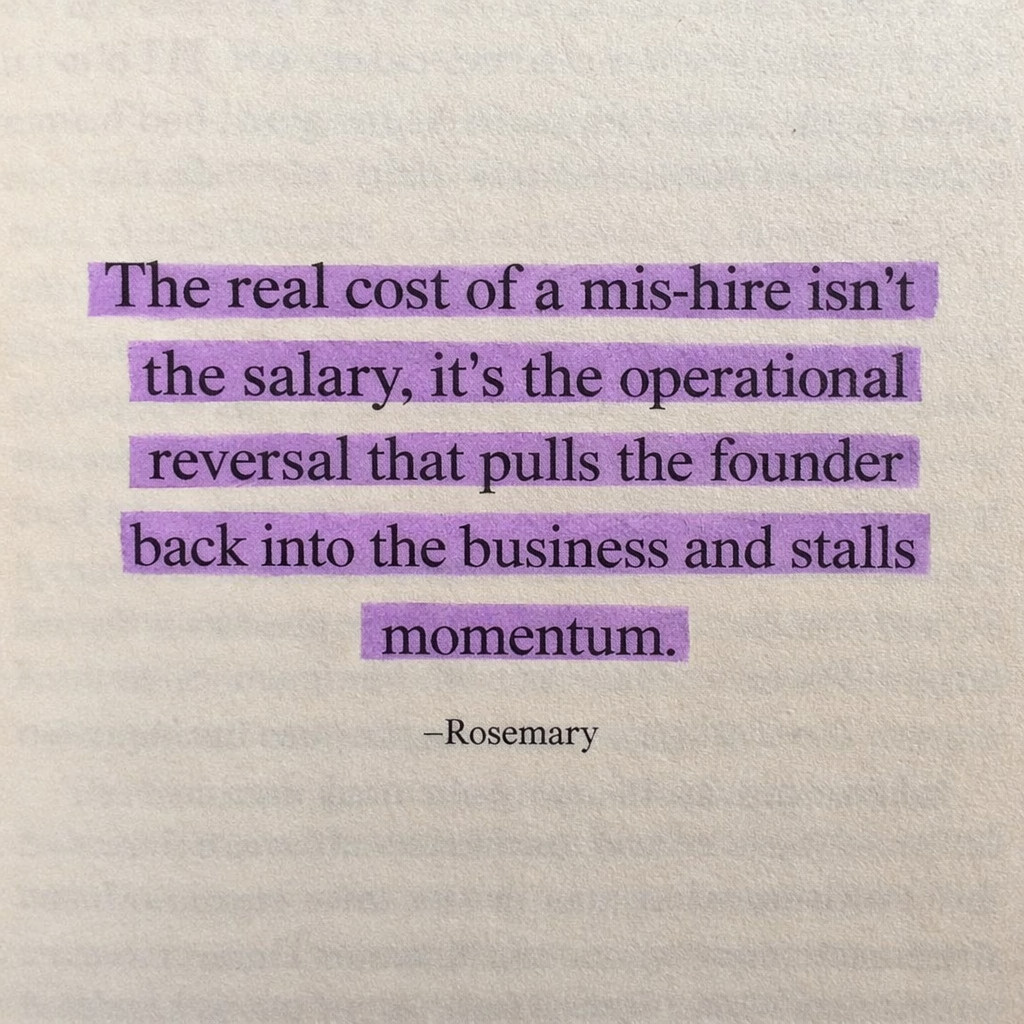
Here’s what I’ve seen inside my own company, Gorilla Stationers, and in many others: operations and building are two separate things. Most operations professionals are great at optimizing, but not at building systems from scratch.
If intake happens five different ways, case handoff depends on memory, and no one’s really sure who owns what, most operations managers will struggle. They first need to understand what’s going on, then build a system, and only then can they run it. When they realize it’s not about running but about building, they often leave.
So before hiring someone to run the ship, ask yourself: is the ship built?
And by built, I mean: • Standardized onboarding • Clear case handoff • A follow-up system that doesn’t rely on you at 10 p.m.
These are the things we as founders have to create first. In my experience, maybe one in a hundred operations managers is both good at building and happy to do it.
They’re two different jobs.
Don’t hire an ops lead to figure it out. Build the system first, then hand over the keys.
Because even the best captain can’t steer a ship that’s still under construction.
Before you hire, ask yourself this: am I ready for a new team member?
A lot of founders are in pain. Overwhelmed. Buried in tasks. Stretched too thin and running on fumes.
So they do what feels logical: they hire someone. Maybe a VA, maybe an operations manager, someone to finally take things off their plate.
And here’s what I’ve seen again and again: if the foundation isn’t ready, the hire won’t save you. Most people don’t come in and build systems for you. They execute what’s already there.
So before you hire, ask yourself: • Are your workflows documented? • Do you know what success looks like in this role? • Is there one central place for tasks and communication? • Are you available to onboard and give context for the first two to four weeks?
If the answer is no, even the best hire will feel lost—and so will you.
Hiring doesn’t fix chaos. It amplifies it.
And yet, this happens all the time: founders hiring to feel productive instead of getting prepared, adding people instead of fixing systems, confusing motion for progress.
Hiring isn’t about making you feel less lonely in your business. It’s about making it run better. And that only works when there’s clarity.
So the next time you’re tempted to post that job listing, pause and ask yourself: are my systems ready?
The right hire can be transformational, but only when the business is ready to receive them.
Most founders I know don’t actually have one job, they have three. Or five. Or ten. I’ve been there myself: one hat for sales, one for operations, one for HR, and another for customer service (all before lunch)
What does that mean for hiring? Too often, when we try to hire in the middle of that chaos, we end up writing job descriptions based on our overwhelm, not on a clear map of the company. That’s why coaching systems like EOS, Bloom Growth, and Scaling Up all push leaders to build an organizational (or accountability) chart.
I used to think: how boring. Until I realized it’s not just a chart, it’s a mirror.
When I first drew mine, I suddenly saw:
I was holding three roles.
Some teammates were holding half a role.
And some roles didn’t even exist.
Once that truth was on paper, I was finally able to play the jigsaw puzzle, moving responsibilities left, right, up, and down until every role made sense (and I had less on my plate).
Only then can you: ✔️ Write job descriptions that actually stick ✔️ Carve out tasks without leaving holes ✔️ Stop hiring “a warm body to do stuff”
Most small companies never do this exercise. But the ones who do unlock a level of clarity that makes scaling possible.
Have you ever done the organigram exercise? What surprised you most when you saw your company on paper?
Hiring feels hard. We chase culture fit. We obsess over “value alignment.” And yes, they matter. But if I’m honest, I’d bet that 95% of failed hires come down to one boring thing: bad, or nonexistent, job descriptions especially in small companies.
I’ve seen it in my own businesses, and I’ve seen it when friends ask me why their new hire isn’t working out. If the role itself isn’t clear, no amount of culture magic will fix it.
Over the years, here’s what I’ve learned makes a job description actually work: 1️⃣ Purpose – why the role exists at all 2️⃣ Reporting – who they answer to 3️⃣ Company intro – why someone should be excited to join 4️⃣ Objectives – the real outcomes you expect 5️⃣ Day-to-day duties – what they’ll actually be doing
It sounds simple, but most job descriptions I see are either vague (“we just need a VA”) or contradictory (“do our marketing and fix IT”). No wonder the hires don’t stick.
So before you go looking for “the perfect cultural fit,” ask yourself: would a smart, motivated person even know how to succeed in this role? That clarity is where good hiring really starts.
Lake Bled looked effortless. But I bled sweat and tears.
This week in Slovakia, I visited Lake Bled with a friend. People were gliding across the water, smiling, and rowing with one hand like they were born for it. I told my friend, “Let’s rent a boat. I’ll row, I’ve got this.” The fact was, I’d never used a rowboat before—but how hard could it be?
Turns out, very hard. The oars were stiff, the boat barely moved, and I kept zigzagging across the water like a drunk duck. Halfway to the island, my arms were already aching. After what felt like an eternity—but really was only twenty minutes—we landed on the island. I was ready for a break.
But the break didn’t last long, because we had to return the boat. My friend offered to row, and I heard myself say, “No thanks, I’ve got this.” Somewhere, deep in my brain, I believed that accepting help made me weak.
I grew up with a strong mother who carried her own suitcases and fixed things in the house herself rather than asking for help. That mindset shaped me. So I rowed. And rowed. And rowed. A sweaty mess, water running down my back, trying to prove something no one was asking me to prove.
That’s when I realized: this is how I used to lead Gorilla Stationers in the beginning. Doing it all. First in, last out. Trying to earn respect by powering through everything alone. Believing that, as the boss, I had to look strong and prove it was my business.
It took me a decade to understand: entrepreneurship isn’t rowing harder—it’s knowing when to hand over the oars while still owning the journey.
Episodio 3 - Oportunidades de contrataciones dentro del Estado de California
Rosemary: Hola a todos, este es nuestro tercer episodio de podcast y estamos bastante emocionadas y agradecidas con todos ustedes que nos escuchan. Este día quiero hablar un poco sobre otras oportunidades que ofrece el estado de California. Recibimos algunas preguntas sobre qué es una agencia estatal y cómo se diferencia de una agencia de una ciudad o municipalidad, y cómo puedo hacer negocios en mi localidad.
Hoy hablaremos un poco de las diferencias entre las organizaciones estatales y las municipales, gobiernos del condado y escuelas. Todos ellos ofrecen diferentes tipos de contratos.
En el episodio anterior hablamos sobre cómo obtener un certificado de pequeño negocio en California. Hoy hablaremos de otro tipo de certificados y sobre si esas certificaciones sirven para aplicar a contratos con otras agencias. La respuesta corta es: el certificado de California para pequeños negocios si tiene reciprocidad con otras agencias dentro del estado, pero muchas veces diferentes agencias en diferentes ciudades dentro del estado tienen otros requisitos.
Así que, si tienes interés de trabajar con tu ciudad local, como San Francisco o Sacramento, solo tienes que revisar el sitio web de la agencia con que deseas trabajar, buscar la opción de “Small Business” y encontrarás información sobre oportunidades de contratación. Sin embargo, solo porque te has registrado como pequeño negocio o que tienes un negocio con alguna desventaja (este factor suele ser ventajoso para los negocios), no significa que la agencia te vaya a llamar o te busque directamente. Necesitas ser proactivo y buscar estas oportunidades por ti mismo.
Por ejemplo, si quisiera hacer negocios con la ciudad de Long Beach, iría al sitio web de la ciudad y revisaría qué contratos ofrece a negocios pequeños. Cuando te registres en estos sitios, te informarán de las oportunidades a las que puedes aplicar en la ciudad. Esto significa que, por ejemplo, Long Beach da 1% de ventaja sobre los negocios localizados en su área geográfica. Esta es una gran oportunidad para los negocios que ahí negocian con comodities.
Algunas ciudades son más grandes que otras. Por eso, cuando visitas el website, por ejemplo, de la ciudad de Long Beach y revisas el programa para negocios pequeños, veras que hay diferentes agencias ofreciendo contratos, así como el estado de California lo hace en su website. Por ejemplo, Long Beach tiene su propio departamento de Parques y Recreación, el puerto de Long Beach (que hace contratos separados de la ciudad). Por eso, definitivamente deberías visitar los sitios web de las ciudades con las que quisieras trabajar.
Muchas de estas agencias en California se manejan bajo el presupuesto del FISCO, lo que significa que, como el FISCO usualmente inicia en el 1° de Julio y termina el 30 de Junio del siguiente año, veras en el website muchas oportunidades de diferentes agencias durante los meses de Abril y Mayo.
Por otro lado, podrías pensar: “nunca he aplicado a una licitación para la municipalidad o el estado”. Para informarte más, lo que puedes hacer es aplicar a un “FOIA act request” (más información: https://www.foia.gov/how-to.html) para recolectar documentación previa sobre las licitaciones que se han hecho anteriormente en la oferta de interés. Podrás ver que tan competitiva fue la licitación, detalles de la misma y qué empresas las ha ganado anteriormente. Esta información será útil para ti porque te darás cuenta que a veces los productores asignan precios especiales a los comodities que ofrecen a las municipalidades. Por ejemplo, 3M que se vende en diferentes lugares, puede asignar precios especiales para las ciudades y las escuelas. Así que sería bueno que hables con tus proveedores de productos y materia prima para ver si tienen este tipo de precios, así te vas familiarizando con este tipo de contrataciones y sabrás cómo participar de entrada.
Me he dado cuenta con la experiencia que cuando busco contratos, hay otros servicios de licitaciones además de FISCAL y BidSync, de los que hablé en el podcast pasado. Uno es Planetbids. Planetbids a veces administra licitaciones para ciertas agencias municipales. Así que, si estas registrado tanto con esta plataforma como con la agencia específica que requiere la licitación, el website te contactará cuando alguna oportunidad se presente. Pero definitivamente no te quedes esperando a que te contacten, no hay razón que te detenga para hablar con la agencia y ver qué se viene, cuales son las oportunidades porque puede que sea una micro compra, ellos no necesariamente van a levantar una licitación. Lo que harían es solamente levantar ofertas informales con un grupo de proveedores que tengan a la mano. Así que si te ayudaría ponerte a su alcance.
Algo que estas plataformas te pedirán será un Capability Statement, del cual hablaremos en nuestro siguiente episodio, cómo hacer uno y cómo debería lucir. Muchas de las agencias a las que apliques te pueden pedir el Capability Statement, y tendrás que asegurarte que esté a su alcance. Esto te ayudará a generar nuevos negocios.
Así como lo he dicho en episodios previos, definitivamente siéntanse libres de contactarnos si tienen preguntas sobre alguna agencia específica a la que quieran acercarse. O no estas seguro de cómo hacer negocios con tu localidad, pueden enviar sus preguntas a nuestro correo podcast@rosemaryczopek.com.