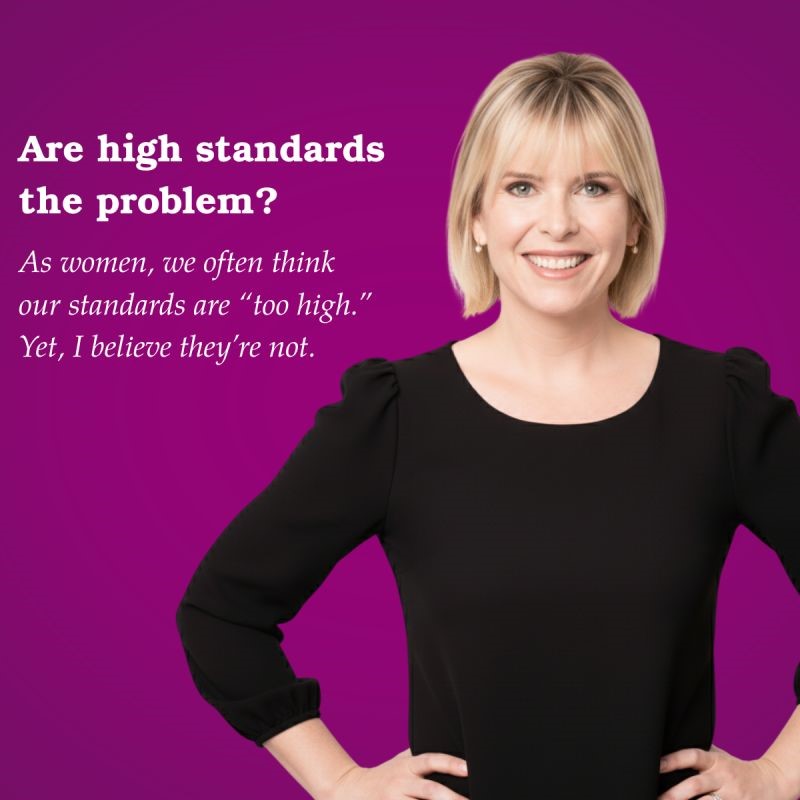
I believe that as female founders, high standards are our strength.
Women founders often second-guess themselves. We ask for excellence, then wonder if we’re being too demanding. We hold people accountable, then feel guilty for making someone uncomfortable.
But high standards aren’t harsh. They’re clarity. They protect our teams, our clients, and the purpose we’re building toward.
Strong boundaries aren’t unfair. They help the right people rise.
And when someone isn’t aligned, letting go isn’t failure. It’s leadership with compassion.
Because we can be kind and still be clear. We can care deeply and still expect excellence. That’s not a contradiction.
That’s respect — for ourselves, for our vision, and for the people we lead.
So don’t shrink your standards to make others comfortable. They exist for a reason. And they keep you, and your business, aligned with what matters most.
You Might also like
-
The Hire That Looked Perfect
It looked like the perfect hire.
Strong resume.
Confident in the interview.
Great culture fit.Three months later, I was back in every decision.
Client approvals.
Team clarifications.
Budget adjustments.Nothing moved without me.
The problem wasn’t the person.
It was the role.
We hired talent.
But we never defined ownership.No clear decision rights.
No protected authority.
No metric that was fully theirs.So every issue climbed back up the ladder.
Here’s what founders miss:
If authority isn’t explicitly transferred, it defaults back to you.
Hiring didn’t fail.
Role design did.Growth adds people.
Scale redistributes control.Quick question:
What decisions are still coming back to you that shouldn’t be?
Post Views: 189 -
When Effort Stops Being the Answer
One of the hardest shifts for high performers is realizing that effort is no longer the problem.
At a certain level, working harder doesn’t create better outcomes.
It just creates fatigue.
What actually moves things forward is precision.
Knowing where your attention creates the most leverage.
Knowing which decisions matter and which don’t.
Knowing when to stop pushing and start designing better systems.
I see so many leaders burn energy on things that shouldn’t require them anymore. Not because they’re incapable of letting go, but because no one ever showed them how to replace effort with structure.
The goal isn’t to do less.
It’s to do what only you can do.
When you make that shift, work feels lighter.
Decisions feel cleaner.
And progress stops feeling forced.
If everything feels heavy right now, it might not be because you’re doing too little.
It might be because you’re doing too much of the wrong things.
Post Views: 363 -
New episode of The Hiring Conversation is out!
EP 05: How To Build a High Trust Remote Team as a Founder With Felena Hanson
This week I sit down with Felena Hanson, Founder of Hera Hub, to talk about what founders often get wrong about remote leadership.
We unpack:
– Why trust is not a personality trait, it’s a design decision
– The difference between accountability and control
– How to create connection without micromanaging
– What high-performing remote teams actually need from their founder
One of my favorite takeaways:
High trust doesn’t mean “hands off.”
It means clear expectations, strong communication rhythms, and real ownership.
If you’re building remotely (or thinking about it), this conversation will challenge how you define leadership.
🎧 Listen now on Spotify, Apple Podcasts, or wherever you stream.
And let me know what’s been the hardest part of leading remotely for you?
Post Views: 234