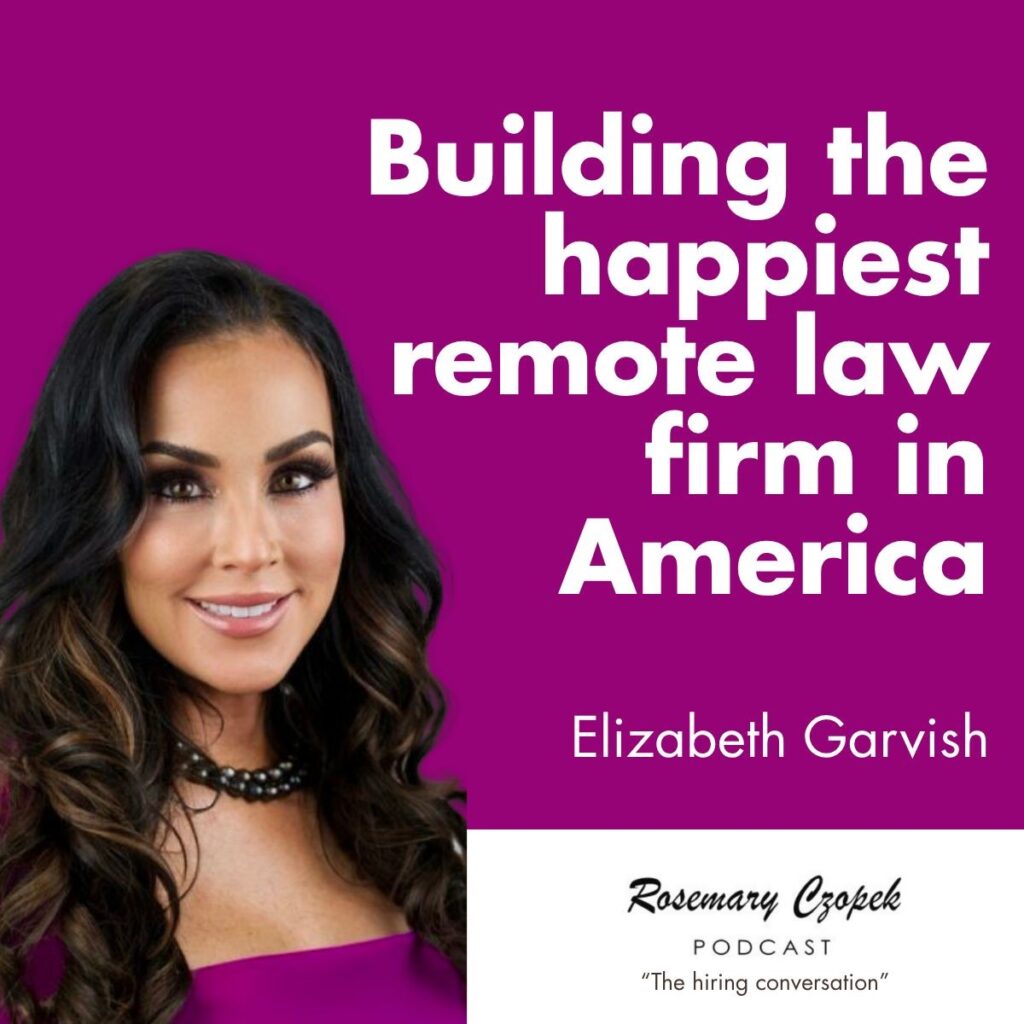
I just recorded a podcast with Elizabeth Garvish, founder of Garvish Immigration Law Group, LLC.
Her story reminded me how much leadership is about trusting people we can’t always see and choosing what Elizabeth calls “love.” In practice, that means leading with empathy, trust, and courage, even when leading from afar.
Elizabeth runs a fully distributed team with lawyers and staff across the United States, Spain, Argentina, Colombia, and Honduras.
Her goal is simple yet powerful: to build the happiest law firm in America.
My top three takeaways:
1️⃣ Love as a leadership system Elizabeth doesn’t lead with rules; she leads with trust. Her team works globally, across time zones and cultures, connected not by oversight but by shared values.
2️⃣ Flexibility as a gift, especially for working mothers Her firm is built around women, many of them mothers, who can choose how and where they work. She proved that flexibility doesn’t have to reduce performance.
3️⃣ Structure makes freedom possible Behind the idea of “love” is solid structure: EOS meetings, SOPs in Trainual, and remote systems that make clarity the default. It’s a vivid reminder that this is how culture scales beyond the office.
For me, this conversation reinforced that remote leadership requires a different set of skills, approaches, and practices—and that it absolutely works. When trust, support, and clarity are part of the system, teams don’t just function remotely; they thrive.
Grateful to Elizabeth for sharing her vision of what leading with love looks like in the real world.
I cried the first time I had to fire someone. I felt it was my fault. As a founder, I’ve always believed we don’t just hire people, we invite them into our vision. We hope they’ll care as much as we do. And when they don’t, or when it doesn’t work, it feels like a personal failure.
For a long time, I kept people too long because I wanted to avoid admitting that failure. Instead, I twisted myself trying to make things work that clearly weren’t. I thought being a “good leader” meant being endlessly patient.
It took me years to understand that being a good leader actually means telling the truth kindly, clearly, and as soon as things become clear.
That’s why I believe most of us don’t burn out from overworking. We burn out from emotional entanglement, from holding the entire relationship on our shoulders, without anyone saying, “Hey, this isn’t working and here’s why.”
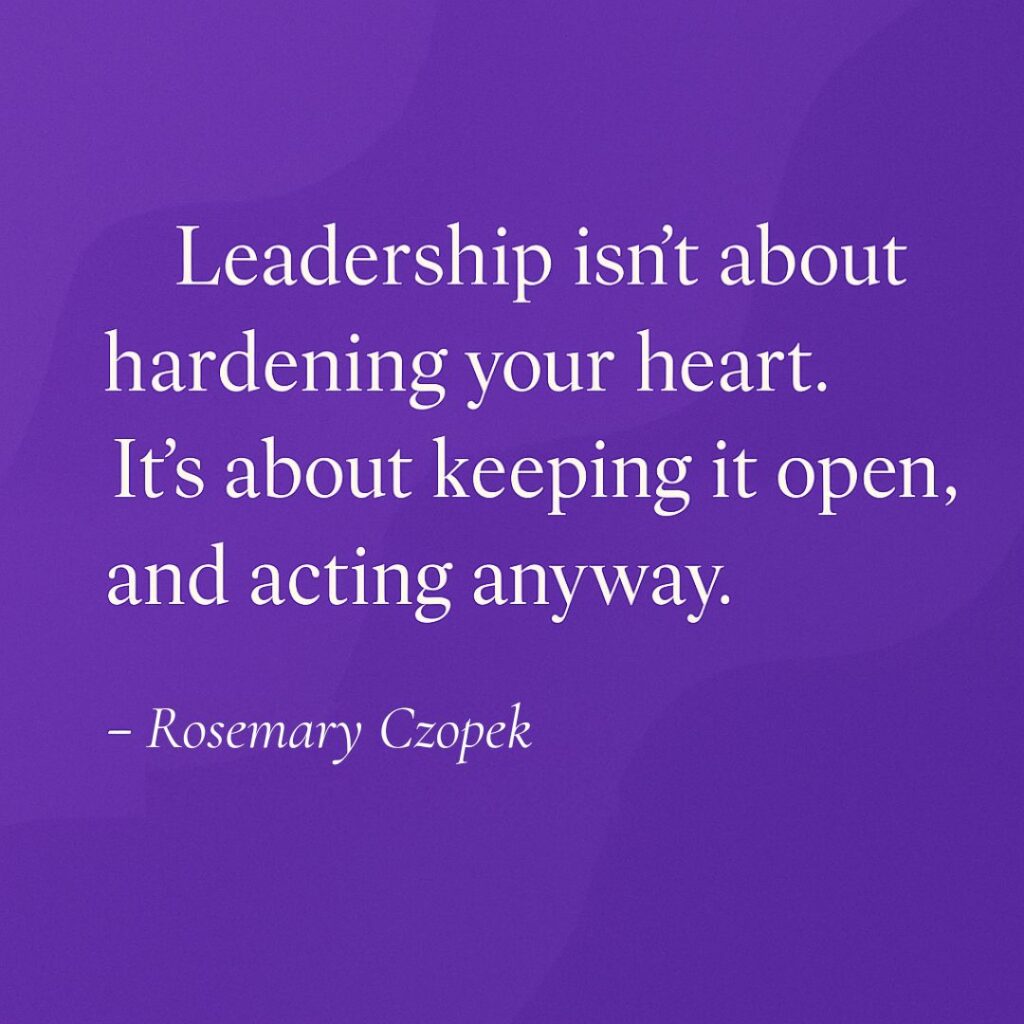
It took me years to learn that leadership isn’t about hardening your heart. It’s about keeping it open and acting anyway.
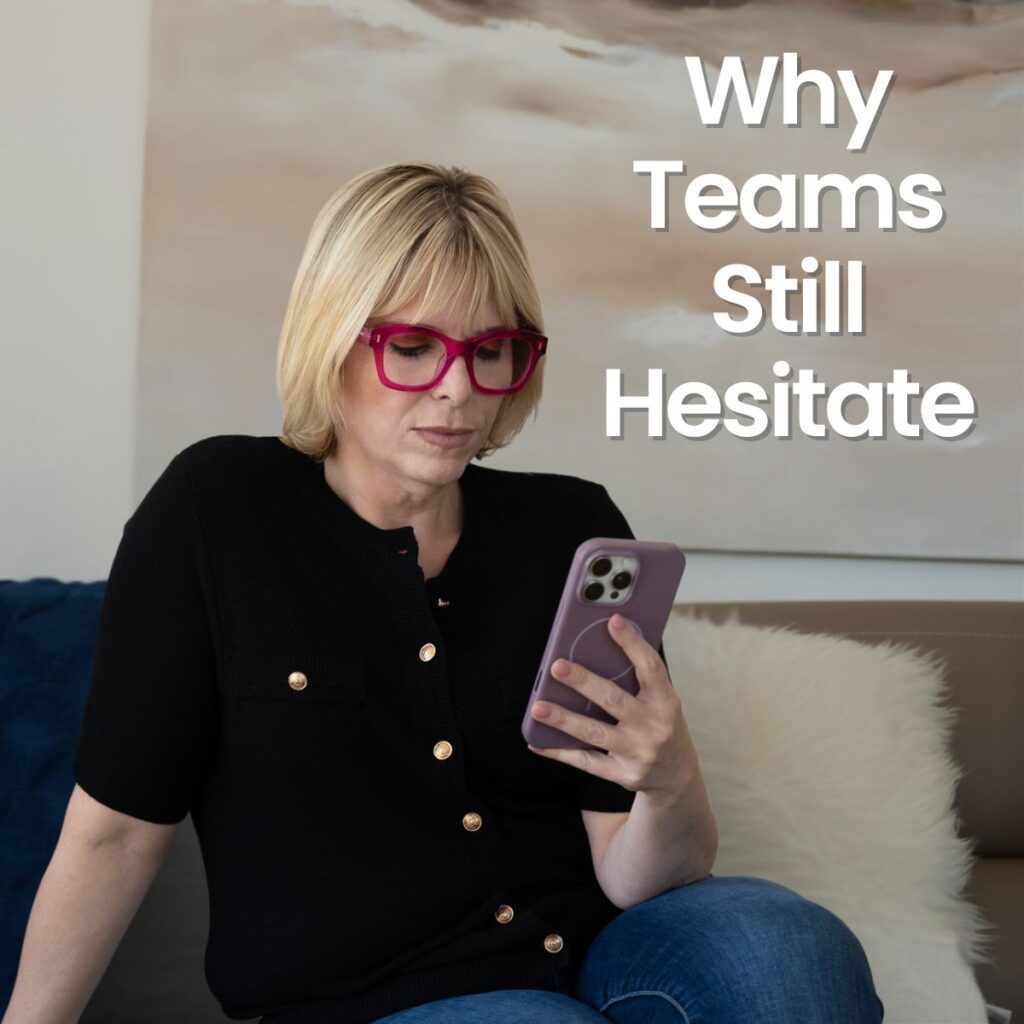
Most leadership mistakes don’t happen because people don’t care. They happen because things stay vague for too long.
I see this over and over again with founders and leaders.
They say things like “I thought it was obvious.” “I assumed they understood.” “I didn’t want to micromanage.”
And then, weeks later, they feel frustrated, disappointed, or quietly resentful.
Here’s the uncomfortable truth. Clarity is not micromanagement. Clarity is kindness.
When expectations live only in your head, people are forced to guess. When priorities are implied instead of stated, people fill in the gaps with their own assumptions. When feedback comes too late, it feels personal instead of useful.
Most teams don’t fail because of a lack of talent. They fail because of a lack of shared understanding.
The leaders who grow the fastest are the ones willing to say the obvious out loud. Even when it feels repetitive. Even when it feels uncomfortable. Even when they worry they’re being too direct. Especially then.
Strong leadership isn’t about having all the answers. It’s about creating an environment where people know where they’re headed, how their work fits in, and what success actually looks like.
That means clearly naming priorities, giving feedback early rather than perfectly, explaining the why and not just the what, and making decisions visible instead of hiding them in private conversations.
When clarity becomes the norm, something shifts.
People stop second guessing themselves. Energy goes into execution instead of interpretation. Trust increases because there are fewer surprises. And leaders stop carrying everything alone.
If you’re feeling stuck, overwhelmed, or disappointed with how things are playing out on your team, ask yourself this before changing the people: have I truly made the expectations clear?
Leadership isn’t about being softer or tougher. It’s about being clearer.

 Please follow and like us:
 Please follow and like us: