“Should I hire an operations manager?”
Maybe not.
The inbox is overflowing, deadlines are constant, and you’re still the one catching the details. The instinct is to think, “If I just find the right person, they’ll clean this up.”
I used to believe an operations manager would save me. Until the third one quit.
Here’s what I’ve seen inside my own company, Gorilla Stationers, and in many others: operations and building are two separate things. Most operations professionals are great at optimizing, but not at building systems from scratch.
If intake happens five different ways, case handoff depends on memory, and no one’s really sure who owns what, most operations managers will struggle. They first need to understand what’s going on, then build a system, and only then can they run it. When they realize it’s not about running but about building, they often leave.
So before hiring someone to run the ship, ask yourself: is the ship built?
And by built, I mean:
• Standardized onboarding
• Clear case handoff
• A follow-up system that doesn’t rely on you at 10 p.m.
These are the things we as founders have to create first. In my experience, maybe one in a hundred operations managers is both good at building and happy to do it.
They’re two different jobs.
Don’t hire an ops lead to figure it out. Build the system first, then hand over the keys.
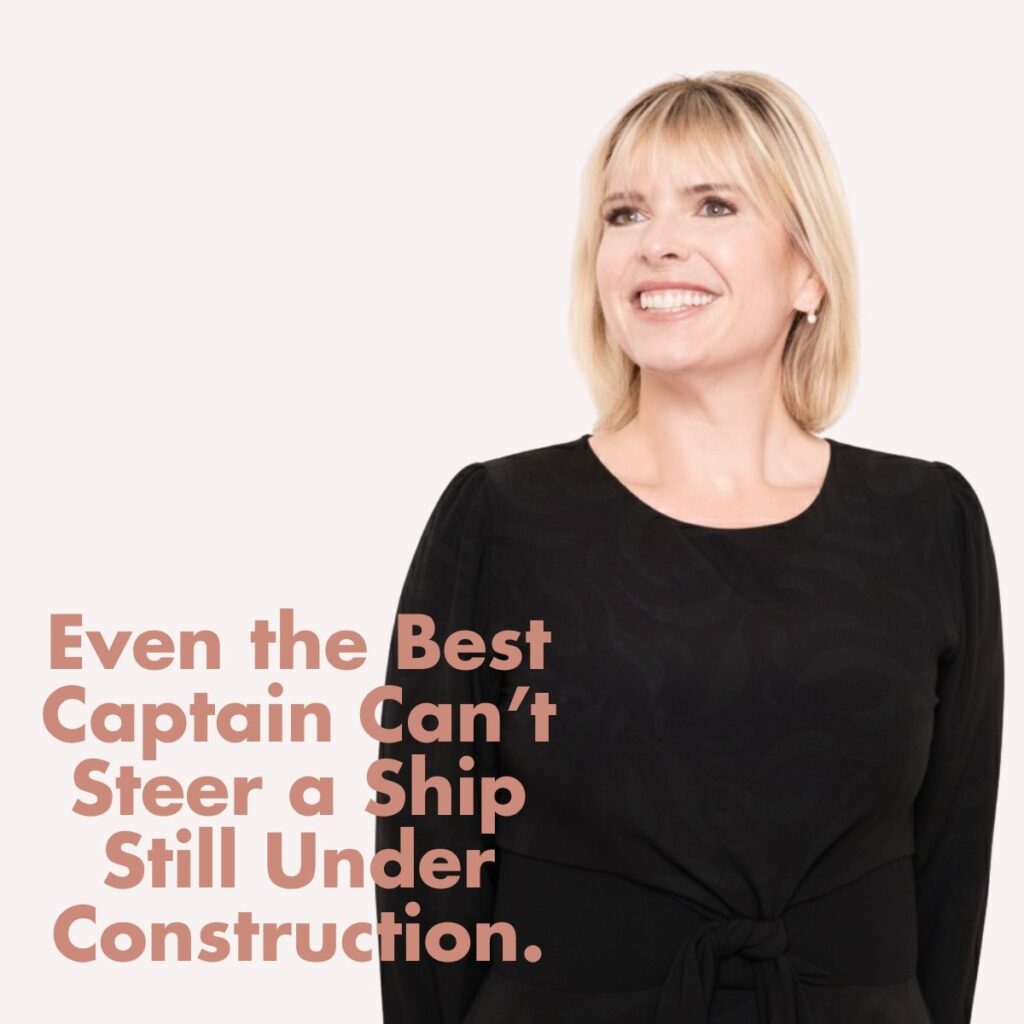
Because even the best captain can’t steer a ship that’s still under construction.
You Might also like
-
Entrepreneurship Isn’t Rowing Harder: It’s Knowing When to Hand Over the Oars
Lake Bled looked effortless. But I bled sweat and tears.
This week in Slovakia, I visited Lake Bled with a friend. People were gliding across the water, smiling, and rowing with one hand like they were born for it. I told my friend, “Let’s rent a boat. I’ll row, I’ve got this.” The fact was, I’d never used a rowboat before—but how hard could it be?
Turns out, very hard. The oars were stiff, the boat barely moved, and I kept zigzagging across the water like a drunk duck. Halfway to the island, my arms were already aching. After what felt like an eternity—but really was only twenty minutes—we landed on the island. I was ready for a break.
But the break didn’t last long, because we had to return the boat. My friend offered to row, and I heard myself say, “No thanks, I’ve got this.” Somewhere, deep in my brain, I believed that accepting help made me weak.
I grew up with a strong mother who carried her own suitcases and fixed things in the house herself rather than asking for help. That mindset shaped me. So I rowed. And rowed. And rowed. A sweaty mess, water running down my back, trying to prove something no one was asking me to prove.
That’s when I realized: this is how I used to lead Gorilla Stationers in the beginning. Doing it all. First in, last out. Trying to earn respect by powering through everything alone. Believing that, as the boss, I had to look strong and prove it was my business.
It took me a decade to understand: entrepreneurship isn’t rowing harder—it’s knowing when to hand over the oars while still owning the journey.
Post Views: 236 -
Surf Pursuit
The Big Oxmox advised her not to do so, because there were thousands of bad Commas, wild Question.
-
Short Page Title Example
The Big Oxmox advised her not to do so, because there were thousands of bad Commas, wild Question.