A couple of weeks ago, I announced that I’m relaunching my podcast—this time focusing on female entrepreneurs: how they lead, how they grow their teams, and how they build businesses that last. Because I truly believe that we women lead differently.
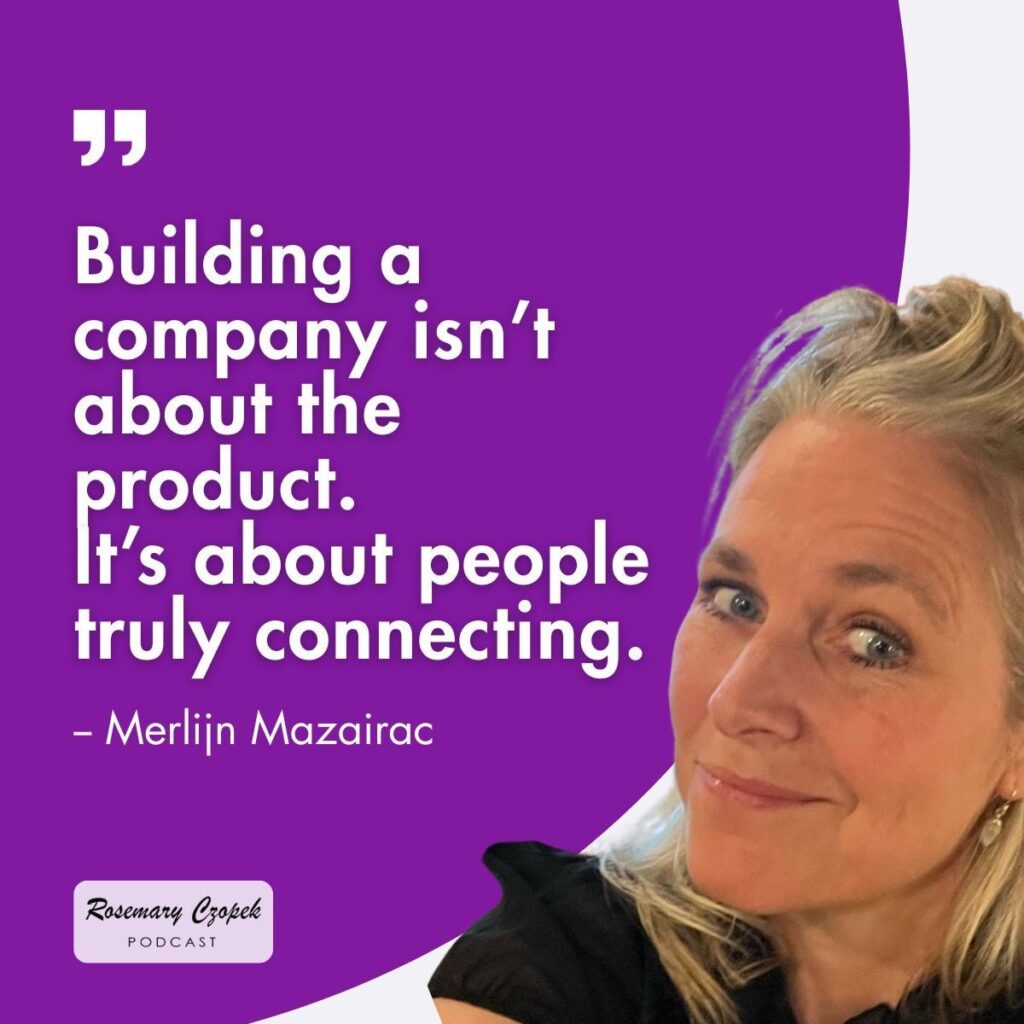
This week, I finally sat down with Merlijn Mazairac to record the first episode, and I left feeling absolutely energized. From the start of our conversation, the connection was there. She spoke with such openness about living abroad, building her consulting company, and leading her team through growth and change.
Here are three ideas from her leadership journey that inspired me most:
1️⃣ Colleagues sitting side by side for years without really knowing each other. Merlijn has seen it happen, and now uses intentional exercises to help people open up and truly connect.
2️⃣ Team fails are leadership lessons. She reminded me that struggles, mismatched hires, disconnection, and even tough exits all carry value. Talking about them openly makes us better leaders—and helps others avoid the same mistakes.
3️⃣ Salary conversations in times of inflation. She doesn’t shy away from the tough talks—the ones that test not just your budget, but your leadership itself.
For me, this first recording is about growing as a leader by listening to the honest stories of others. I’m deeply grateful to Merlijn for sharing her journey so openly—and excited for all the conversations ahead.
You Might also like
-
You Can’t Build Loyalty With a Tight Fist
Raising Salaries Won’t Fix Your Turnover Problem
I’ve seen companies with sky-high churn, and others paying exactly the same where employees stick around for years.
Both assume that’s just how it is. The struggling ones blame it on the salary, saying they can’t pay enough.
Here’s what I believe: turnover is rarely about the paycheck. It’s almost always about purpose.
When we get a new inquiry and see people leaving in waves, that’s not a pay problem. That’s a culture problem hiding in plain sight.
Often these companies pay well, yet people still leave. Meanwhile, the businesses with the lowest churn have something different in common: their people know why they’re there, because they feel part of something that matters.
I don’t believe people leave companies. They leave bosses and organizations that fail to give their work meaning.
If you want people to stay, you don’t need free kombucha or another salary bump. You need to lead with purpose. And sometimes, the smallest gestures mean the most:
• A thank you when it counts
• A birthday remembered
• A dinner where work doesn’t come upBefore you raise another salary, ask yourself: does each and every team member know why they’re here?
Post Views: 337 -
The Real Cost (and Value) of Outsourcing
There’s a common misconception about outsourcing: that agencies charge double what employees get.
Looks like a nice business model, doesn’t it?
Here’s what most business owners don’t see.
Before a single interview happens, a good agency has already spent hours on these five things:
1️⃣ Understanding the company, its values, its workflow, its pain points.
2️⃣ Writing and rewriting the job description so it actually reflects what’s needed, not just what sounds good.
3️⃣ Filtering hundreds of applications, spotting who’s real and who’s copy-pasted their resume with AI.
4️⃣ Vetting for skills and mindset, because the wrong attitude costs more than the wrong tool.
5️⃣ Mapping cultural fit: who will thrive with your leadership style, your pace, your expectations.By the time a small business owner finally meets a candidate, the real work has already been done, even if they never saw it.
The value isn’t in “finding someone.”
The value is in hiring with a level of quality most small companies struggle to reach, simply because they don’t hire often enough to build these systems themselves.Good outsourcing doesn’t cost you more. It saves you from paying for the same mistake twice.
Post Views: 349 -
When Effort Stops Being the Answer
One of the hardest shifts for high performers is realizing that effort is no longer the problem.
At a certain level, working harder doesn’t create better outcomes.
It just creates fatigue.
What actually moves things forward is precision.
Knowing where your attention creates the most leverage.
Knowing which decisions matter and which don’t.
Knowing when to stop pushing and start designing better systems.
I see so many leaders burn energy on things that shouldn’t require them anymore. Not because they’re incapable of letting go, but because no one ever showed them how to replace effort with structure.
The goal isn’t to do less.
It’s to do what only you can do.
When you make that shift, work feels lighter.
Decisions feel cleaner.
And progress stops feeling forced.
If everything feels heavy right now, it might not be because you’re doing too little.
It might be because you’re doing too much of the wrong things.
Post Views: 67