Blog

Cheaper Help to Aligned Help: The Story Behind Staff4Half

I thought I needed cheaper help. What I really needed was aligned help.

Back when I was running my California-based office supply business, Gorilla Stationers, payroll was my biggest expense and compliance headaches never seemed to stop. Despite paying top dollar, I couldn’t always count on the work getting done right. So I did what every cost-conscious entrepreneur eventually does: I hired offshore.

The Philippines made sense, great people, affordable rates. But then came the 2 a.m. Zoom calls. Not for me, but for my team abroad. I could hear the exhaustion in their voices, even when they smiled through it. The 12-hour time difference between the Philippines and the U.S. made me wonder: is this really how I want to grow, by making people labor through their nights? It felt unethical.

I didn’t want just cheap help. I wanted team members who could have a healthy work-life balance that worked for them and for me. And that shouldn’t be limited to my U.S. team.

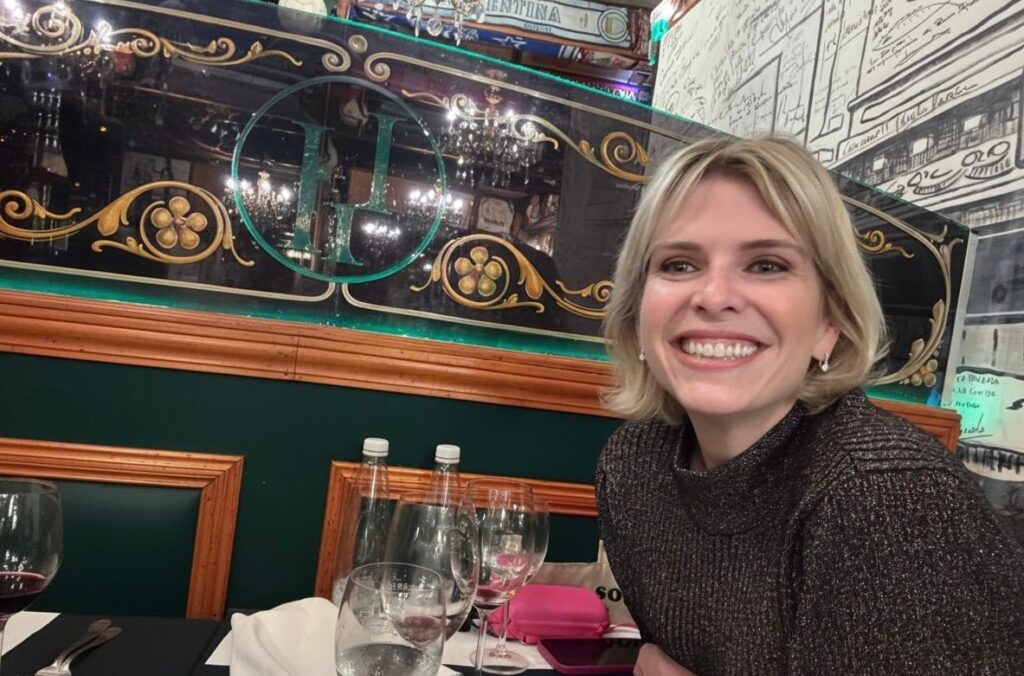
That dilemma was still on my mind when I flew to Buenos Aires for an EO event. What I found surprised me:
✔️ U.S. time-zone alignment
✔️ A cost advantage compared to U.S. salaries
✔️ And a European-style culture of ownership and pride in work

So I decided to give it a try. I hired a VA to help me with my admin. That one hire turned into two. Then five. They helped me grow Gorilla Stationers while building a healthier team.

As I shared my experience, the inquiries started:
“Where did you find this person?”
“Can you help me get someone like that?”

And just like that, Staff4Half was born, from solving my own talent problem in a way that finally felt aligned with my values, my clients, and my team.

If you’re tired of trading cost for quality, or ethics for output, I’ve been there. There’s a better way to build.

Hiring Isn’t Tinder, It’s About Building Relationships

Have we turned hiring into Tinder?

Swipe. Match. Delete.

Hiring has started to look more and more like a high-churn dating game. Job platforms have made applying so easy that an employer can be swamped with hundreds of applications for a single role. A few get shortlisted, some get invited to interviews, and one gets chosen. The others—the ones who made it all the way to final rounds—receive a polite rejection. And that’s the end of the short romance. No follow-up. No “let’s stay in touch.”

A few months later, the new hire doesn’t work out—or another similar role needs to be filled. Suddenly the founder is scrambling: “Do you know anyone good? I need to rehire, fast.” And just like that, they’re back to hiring Tinder. Starting from scratch. Swipe. Match. Delete. Ignoring all the candidates from the last hiring round.

I believe most companies don’t have a hiring problem—they have a relationship problem. Hiring isn’t a one-off transaction. It’s a system of trust that grows over time, if it’s nurtured. It’s about keeping the door open, even when the role is already filled.

But if we treat candidates like one-time bets, it’s no wonder that hiring always feels like a cold start—with too many frogs to kiss before we get lucky (or not). The best founders I see have a relationship management system. Sometimes it’s as simple as adding every applicant on LinkedIn so that, when a new role opens up, previous candidates see it right away. That way, they keep their pipeline warm.

Great talent isn’t something we find at the push of a button. It’s something we build and foster long before we even know we need it.

The Best Lessons Don’t Come From Books, They Come From People

The best lessons don’t come from books. Sometimes, they come from a night at Coldplay with a friend.

Last week, I met up with Dan Baker from Valatam in East London, just before the Coldplay concert. Technically, Dan is a competitor, he runs two outsourcing agencies. Most people would hold back in that situation. I don’t.

Why? Because I met Dan through EO, the Entrepreneurs’ Organization. And in EO, I learned that even when we’re in the same industry, we don’t compete with each other. The only real competition is with ourselves.

To grow my business, I need to grow myself not fear what competitors are doing. That’s why every time Dan and I meet, we talk openly. And I walk away with ideas, feedback, and perspectives you can only get from someone who’s walked the same road.

I’m grateful for friends who prove that you can cheer each other on, learn from each other, and still win in business.

P.S.: The Coldplay concert made a memory. But peer learning makes change.

Leading with Respect: Letting People Find Their Sweet Spot

Letting go shouldn’t be hard. What if we approached endings differently? What if a team member leaving was simply the next step in helping them find their next sweet spot?

I believe we’re not marrying our team members, and they’re not marrying us. No job is forever—and that’s okay. Everyone has a sweet spot, a place where their strengths shine and where they are at their best. Sometimes that place changes. When it does, it’s our job as leaders to meet that moment with respect, not regret.

Take Augustina. She joined Staff4Half as a salesperson and gave it her all. But we knew her calling was in recruitment, not sales. So when the right opportunity came, she took it—and we cheered her on.

Yes, we’re sad to see her go. She leaves behind a gap. But more than anything, I am proud to have been part of her journey, and proud to see her step fully into what she’s meant to do.

Because I believe that good leadership means keeping your people’s well-being at heart—even when it takes them in a different direction.

P.S.: Today is her first day, and we wish her all the best.

The Freedom Test: Can Your Business Run Without You?

I barely checked my email for the past two weeks and drastically reduced my workload. It’s summer, and I’ve been traveling through Europe. On my way to Bulgaria, I had breakfast with Janet Bell, who happened to be here as well. Janet and I have known each other for years, going back to our time in OPWIL (Office Products Women in Leadership).

Even though so much has changed around us, our connection was instant. We enjoyed coffee in the sun and talked about the changes AI is bringing to the office supply space.

That conversation reminded me of something I’ve come to appreciate deeply: as business owners, we need to build companies that can run without us. If my business can’t operate while I’m away, while I’m traveling, then it’s time to redesign the system.

Here’s what made that possible for me:
✔️ Delegation rooted in trust
✔️ Systems that carry the weight
✔️ People who show up and take ownership

It sounds so obvious and even banal, yet it took me years to get right. And I see so many business owners who know this, yet still struggle to find the right people who allow them to let go.

This trip gave me gratitude for the freedom I’ve been able to build.

Rosemary Czopek podcast

Behind every small business is a story worth telling. In this podcast, Rosemary Czopek shares real-world lessons from entrepreneurs and leaders who turned challenges into smart business moves.

Freedom Doesn’t Come From Growth Alone

Most entrepreneurs start a business for two reasons: they want to do something better, and they want freedom. We build, we push forward, and eventually, we fix the problem. But freedom? That’s harder to reach.

We get caught in the fixing, and we convince ourselves that only if we grow, freedom will come. It took me time, and a few detours, to figure out how to build a business that doesn’t just work, but that works without me in every detail.

Now I focus less on fixing everything and more on building teams that run without me. Because freedom doesn’t come from growth alone. Freedom comes from clarity, structure, and a team that can move the business forward without me.

If you’re stuck in the fixing, maybe it’s time to design a business that frees you, not just feeds you.

The Real Burnout: Why Leadership Isn’t About Hardening Your Heart

I cried the first time I had to fire someone. I felt it was my fault. As a founder, I’ve always believed we don’t just hire people, we invite them into our vision. We hope they’ll care as much as we do. And when they don’t, or when it doesn’t work, it feels like a personal failure.

For a long time, I kept people too long because I wanted to avoid admitting that failure. Instead, I twisted myself trying to make things work that clearly weren’t. I thought being a “good leader” meant being endlessly patient.

It took me years to understand that being a good leader actually means telling the truth kindly, clearly, and as soon as things become clear.

That’s why I believe most of us don’t burn out from overworking. We burn out from emotional entanglement, from holding the entire relationship on our shoulders, without anyone saying, “Hey, this isn’t working and here’s why.”

It took me years to learn that leadership isn’t about hardening your heart. It’s about keeping it open and acting anyway.

Entrepreneurship Isn’t Rowing Harder: It’s Knowing When to Hand Over the Oars

Lake Bled looked effortless. But I bled sweat and tears.

This week in Slovakia, I visited Lake Bled with a friend. People were gliding across the water, smiling, and rowing with one hand like they were born for it. I told my friend, “Let’s rent a boat. I’ll row, I’ve got this.” The fact was, I’d never used a rowboat before—but how hard could it be?

Turns out, very hard. The oars were stiff, the boat barely moved, and I kept zigzagging across the water like a drunk duck. Halfway to the island, my arms were already aching. After what felt like an eternity—but really was only twenty minutes—we landed on the island. I was ready for a break.

But the break didn’t last long, because we had to return the boat. My friend offered to row, and I heard myself say, “No thanks, I’ve got this.” Somewhere, deep in my brain, I believed that accepting help made me weak.

I grew up with a strong mother who carried her own suitcases and fixed things in the house herself rather than asking for help. That mindset shaped me. So I rowed. And rowed. And rowed. A sweaty mess, water running down my back, trying to prove something no one was asking me to prove.

That’s when I realized: this is how I used to lead Gorilla Stationers in the beginning. Doing it all. First in, last out. Trying to earn respect by powering through everything alone. Believing that, as the boss, I had to look strong and prove it was my business.

It took me a decade to understand: entrepreneurship isn’t rowing harder—it’s knowing when to hand over the oars while still owning the journey.

When the System Forgets Entrepreneurs: Rethinking Employment in America

I didn’t start a company to be told which chair to buy, how many minutes a lunch break has to be, or whether my break room snacks meet code. I started it because I believed in building something better, and I wanted a team to build it with.

But what I’ve learned over 13 years as a California employer is this: the system doesn’t trust employers to care about their people. It assumes we’re out to exploit, and it assumes compliance creates care. So it piles on rule after rule, not realizing that the weight of all this regulation doesn’t protect good people—instead, I believe it crushes the ones who are trying to be good people.

As a female entrepreneur, I’ve always wanted to give my team the best. Yet I’ve spent more time worrying about lunch break laws than about how to help my people grow. To me, that’s not what leadership is supposed to look like.

Because I believe the best entrepreneurs do care. We remember birthdays. We pull all-nighters. We put payroll before profit. Not because a rulebook told us to, but because that’s who we entrepreneurs are. But somewhere along the way, the system forgot that.

It breaks my heart that the system stifles the very people who build businesses. And I believe that by doing this, we’re not protecting workers—we’re shrinking futures. More and more founders I know are looking abroad, not for cheaper labor, but for the freedom to lead well again.

And that should worry us all. Because when the American dream becomes unlivable for its dreamers, the dream doesn’t die—it just moves to another country.

Scroll to top