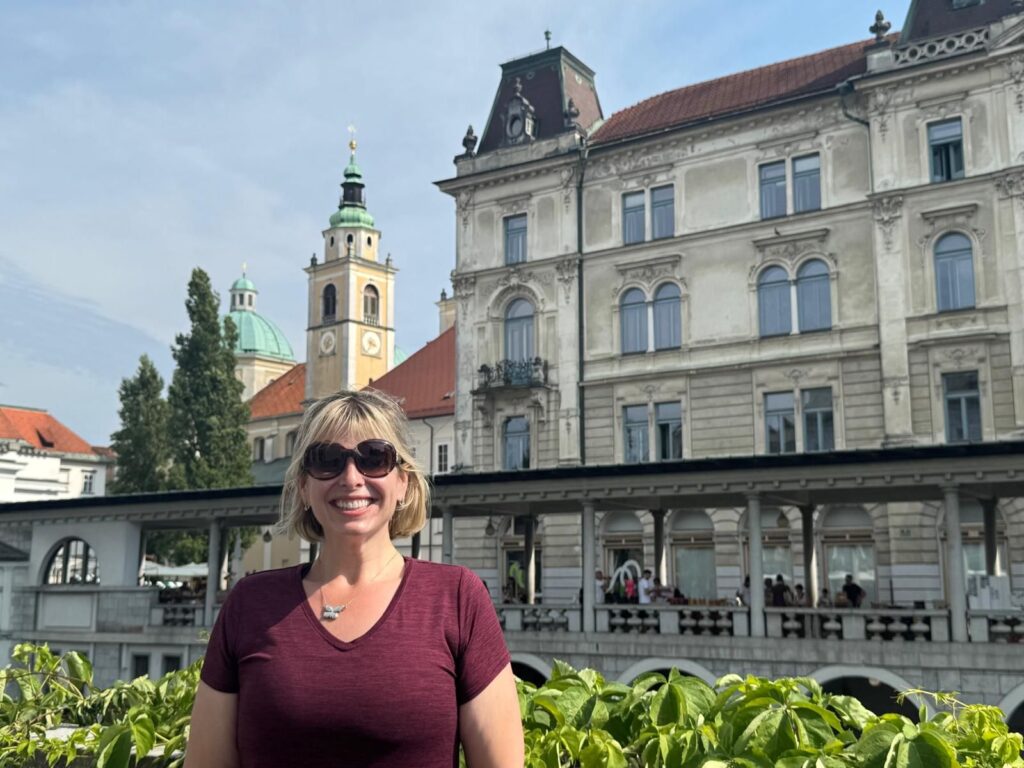
Most entrepreneurs start a business for two reasons: they want to do something better, and they want freedom. We build, we push forward, and eventually, we fix the problem. But freedom? That’s harder to reach.
We get caught in the fixing, and we convince ourselves that only if we grow, freedom will come. It took me time, and a few detours, to figure out how to build a business that doesn’t just work, but that works without me in every detail.
Now I focus less on fixing everything and more on building teams that run without me. Because freedom doesn’t come from growth alone. Freedom comes from clarity, structure, and a team that can move the business forward without me.
If you’re stuck in the fixing, maybe it’s time to design a business that frees you, not just feeds you.
You Might also like
-
Pause, Zoom Out and Think Bigger
This week in Panama 🇵🇦 was one of those “pause and zoom out” moments.
I attended a LAC event with 140+ entrepreneurs from 50 countries, and I’m leaving with a full heart and a fresh perspective.
I’m grateful for:
✨ the connection
✨ the introspection
✨ the new ideas
✨ getting out of my comfort zone
✨ the inspiration to think bigger — and more globally
✨ the reminder that life can be both ambitious and magicalAnd honestly… I’m also deeply grateful for my team at Staff4Half.
Because the only way I can say yes to experiences like this is by building a business that supports freedom — and creating a model where remote talent can manage my calendar, meetings, and tasks from anywhere in the world.
This is why I do what I do.
Not just to build a company… but to build a life.
If we met in Panama this week, I’d love to stay connected 🤍
Post Views: 45 -
What Travel Taught Me About My Business
I learned more about my business while flying to Panama than I do on most workdays.
Not from dashboards.
Not from meetings.
But from stepping away and watching what happened next.
One of the quiet measures of a healthy business is what happens when the founder steps away.
Not the highlight reel.
Not the revenue numbers.
But whether the wheels keep turning without constant intervention.
I was in Panama recently, and stepping away made this impossible to ignore. Travel has a way of revealing the truth. When you unplug, gaps show up quickly. Decisions stall. Questions pile up. Or… everything keeps moving.
The difference is rarely talent.
It’s structure.
Strong teams don’t need to be micromanaged. They need clarity, trust, and systems that allow good decisions to happen without waiting for permission.
Building that kind of business takes intention.
You design for absence, not heroics.
Because freedom isn’t something you take once the business is “done.”
It’s something you build into the model from the start.
If your business can’t run without you, that’s not a leadership failure.
It’s simply a signal.
And signals are useful, if you’re willing to listen.
Post Views: 58 -
When Leaders Assume, Teams Guess
One of the biggest drains on execution isn’t workload.
It’s mental overhead.
When priorities are unclear, people spend energy interpreting instead of acting.
They replay conversations.
They check messages twice.
They hesitate, not because they don’t care, but because they don’t want to get it wrong.
That hesitation rarely shows up as a problem on paper.
It shows up as slower decisions, muted ownership, and work that feels heavier than it should.
Clarity removes that weight.
When leaders name what matters most, what can wait, and how decisions will be made, something subtle but powerful happens.
People stop bracing.
They stop guessing.
They move.
Not with more pressure.
With more confidence.
I’ve learned that leadership under pressure isn’t about pushing harder or communicating more often.
It’s about communicating more clearly.
Saying the obvious.
Closing open loops.
Making priorities explicit instead of implied.
That’s what restores momentum.
That’s what gives teams room to take ownership without fear.
If execution feels harder than it should, ask yourself this:
What am I assuming people already know?
The answer is usually where clarity is missing.
Post Views: 80