Everyone knows an Emma.
Emma, the founder drowning in to-dos.
Emma, who swore this month she’d finally get help.
Emma, who spent three hours on Fiverr trying to find “a VA who can do everything.” I call them unicorns.
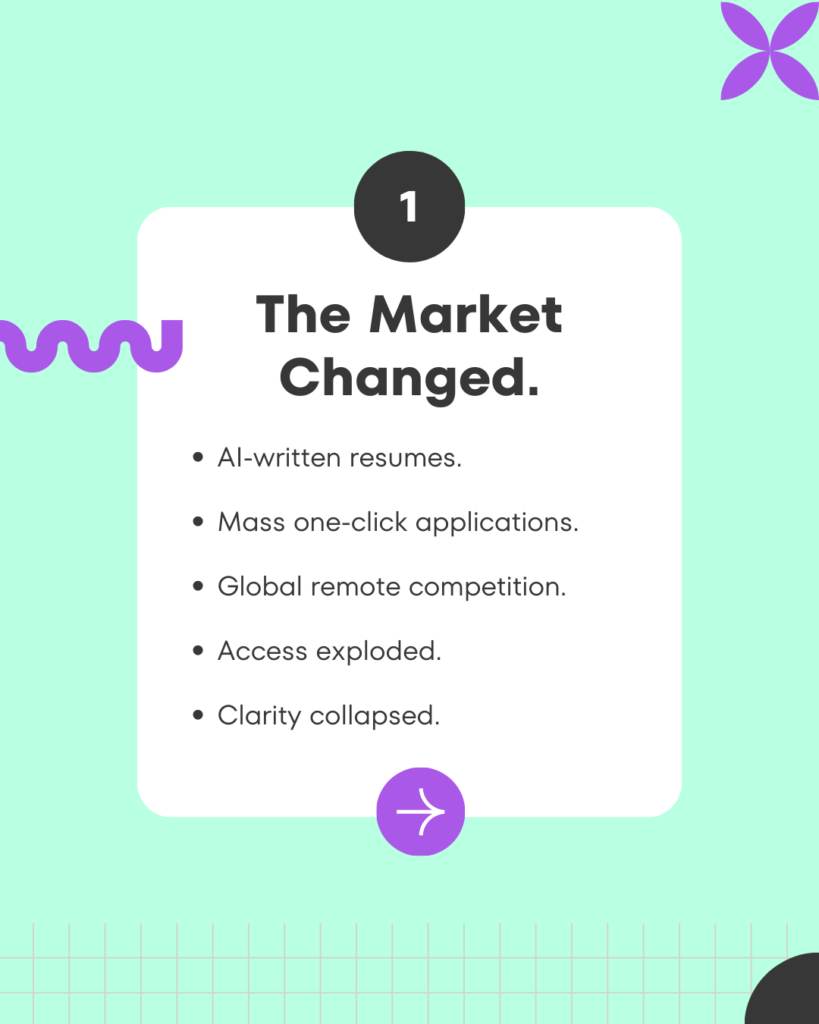
I’ve met many Emmas, and here’s what I’ve observed: Emma isn’t the problem. The hiring process is.
When her inbox hit 1,200 unread messages, Emma went to Fiverr. She typed “virtual assistant, reliable, proactive, English fluent” and hired someone in 48 hours. For two weeks, things looked fine. Then tasks slipped, instructions were repeated, and eventually, the VA disappeared mid-project.
So Emma said what many founders say in this situation:
“I guess I’m just bad at delegating.”
or
“There are no good people out there.”
But here’s what really happened:
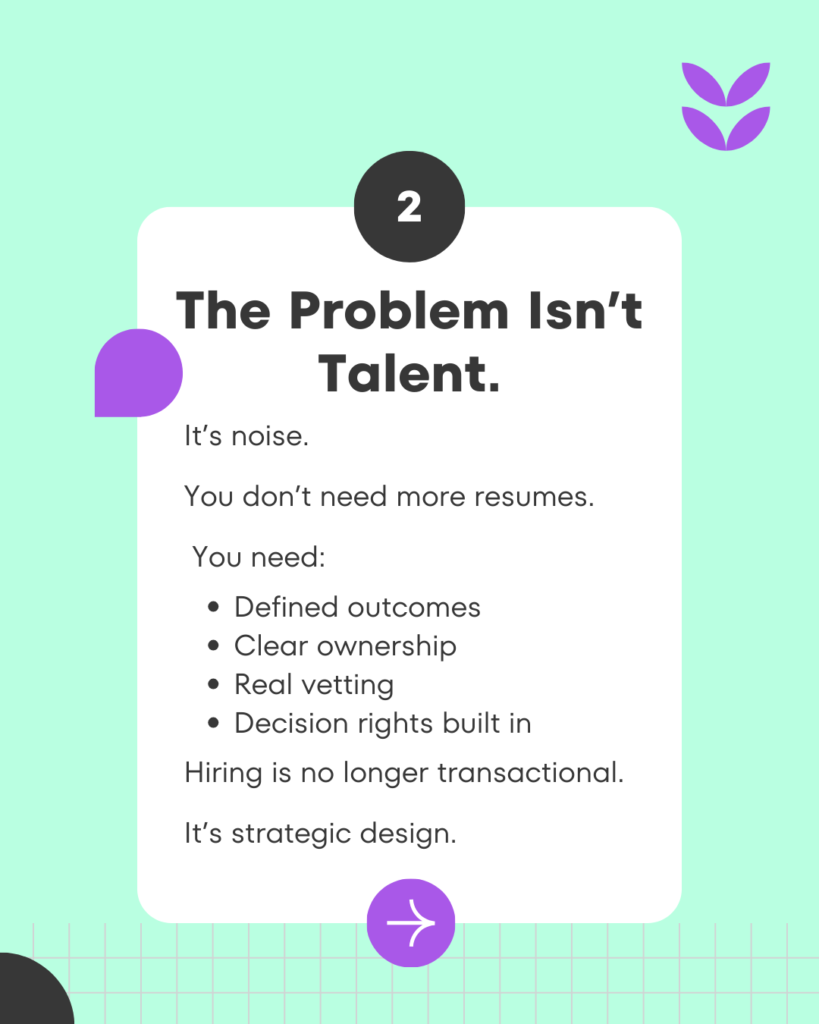
• Nobody helped Emma define what she actually needed.
• Nobody asked, “What will success look like 90 days from now?”
• Nobody said, “You don’t need a VA, you need a project coordinator.”
Marketplaces can’t ask those questions. They just match keywords. They don’t challenge business owners on what they think they need. Marketplaces are built for transactions, not transformations.
Good agencies are different. They sit with the messy notes from founders, the voice messages, the vague frustration of “I just need help,” and turn that into a clear process. They design a role before the hire.
That invisible work — the questioning, the clarifying, the diagnosing — is what turns a two-week freelancer into a two-year team member.
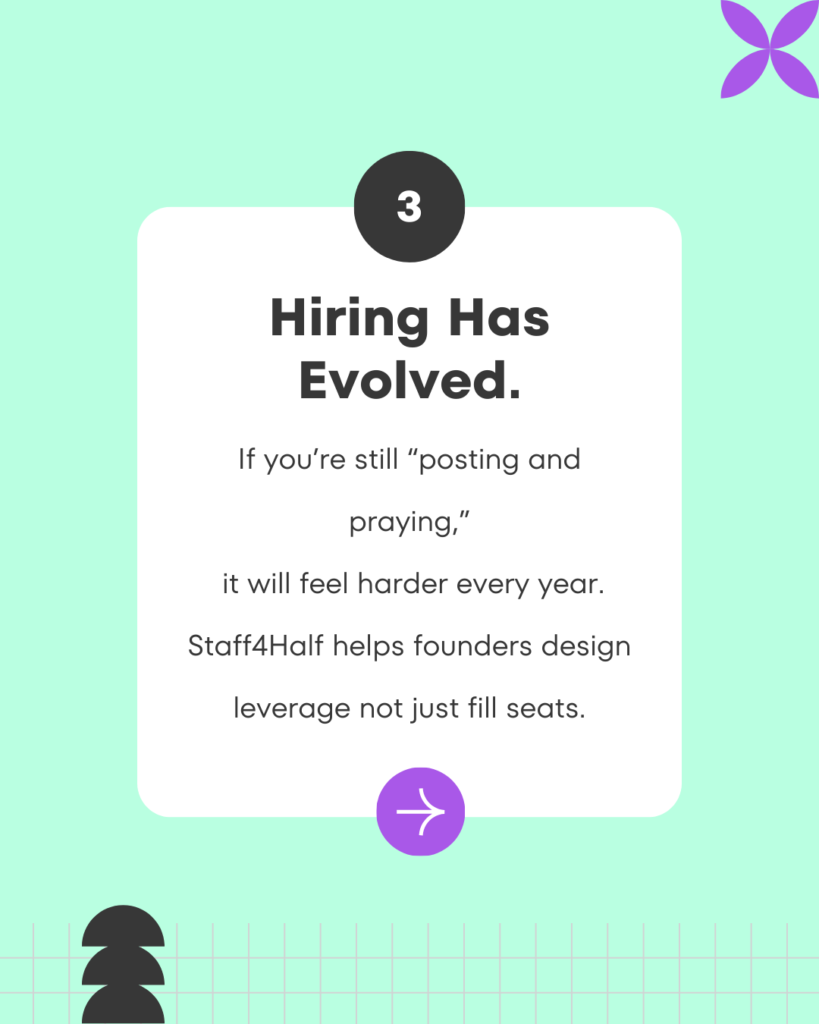
So stop the cycle of hiring before understanding.
Before hiring, take the time to:
1- Get help defining what you truly need.
2- Map the skills to your real priorities.
3- Make sure your new hire has the context to succeed.
The goal isn’t to fill a seat fast. It’s to know when Fiverr fits, and when it doesn’t.
You Might also like
-
You Can’t Build Loyalty With a Tight Fist
Raising Salaries Won’t Fix Your Turnover Problem
I’ve seen companies with sky-high churn, and others paying exactly the same where employees stick around for years.
Both assume that’s just how it is. The struggling ones blame it on the salary, saying they can’t pay enough.
Here’s what I believe: turnover is rarely about the paycheck. It’s almost always about purpose.
When we get a new inquiry and see people leaving in waves, that’s not a pay problem. That’s a culture problem hiding in plain sight.
Often these companies pay well, yet people still leave. Meanwhile, the businesses with the lowest churn have something different in common: their people know why they’re there, because they feel part of something that matters.
I don’t believe people leave companies. They leave bosses and organizations that fail to give their work meaning.
If you want people to stay, you don’t need free kombucha or another salary bump. You need to lead with purpose. And sometimes, the smallest gestures mean the most:
• A thank you when it counts
• A birthday remembered
• A dinner where work doesn’t come upBefore you raise another salary, ask yourself: does each and every team member know why they’re here?
Post Views: 201 -
The Real Cost (and Value) of Outsourcing
There’s a common misconception about outsourcing: that agencies charge double what employees get.
Looks like a nice business model, doesn’t it?
Here’s what most business owners don’t see.
Before a single interview happens, a good agency has already spent hours on these five things:
1️⃣ Understanding the company, its values, its workflow, its pain points.
2️⃣ Writing and rewriting the job description so it actually reflects what’s needed, not just what sounds good.
3️⃣ Filtering hundreds of applications, spotting who’s real and who’s copy-pasted their resume with AI.
4️⃣ Vetting for skills and mindset, because the wrong attitude costs more than the wrong tool.
5️⃣ Mapping cultural fit: who will thrive with your leadership style, your pace, your expectations.By the time a small business owner finally meets a candidate, the real work has already been done, even if they never saw it.
The value isn’t in “finding someone.”
The value is in hiring with a level of quality most small companies struggle to reach, simply because they don’t hire often enough to build these systems themselves.Good outsourcing doesn’t cost you more. It saves you from paying for the same mistake twice.
Post Views: 199 -
Hiring a Business Coach Isn’t Weakness, It’s Wisdom
Is hiring a business coach a sign of weakness?
I don’t think so.
As companies grow, so do the problems, and we at Staff4Half are no exception.
More people means more moving parts, and more decisions to make. And suddenly, it’s not about the ideas of the founder anymore (sadly), it’s about how well we can leverage the knowledge of the whole team.
And that’s where it gets hard. Inside the company, we all carry our own baggage:
preconceived ideas
entrenched communication styles
blind spots we don’t even notice
I believe that especially when we as founders want to create an extraordinary company culture of support and fostering, being open and honest in the interest of the business can become harder.
And that’s where I see an outside coach brings immense value.
A coach challenges us as a team without politics and can help us see things we’d never catch on our own, so that we can stay friends while also doing what is right for the business.
That is, I believe, the beauty of an outside coach.
And it’s not a weakness, it’s a strength!
P.S.: Did you know that women are more likely to hire a business coach than men? I found some reports that suggest that half of business coaching is done in woman-led companies (when women only lead a minority of businesses).
What’s your observation?
Post Views: 206