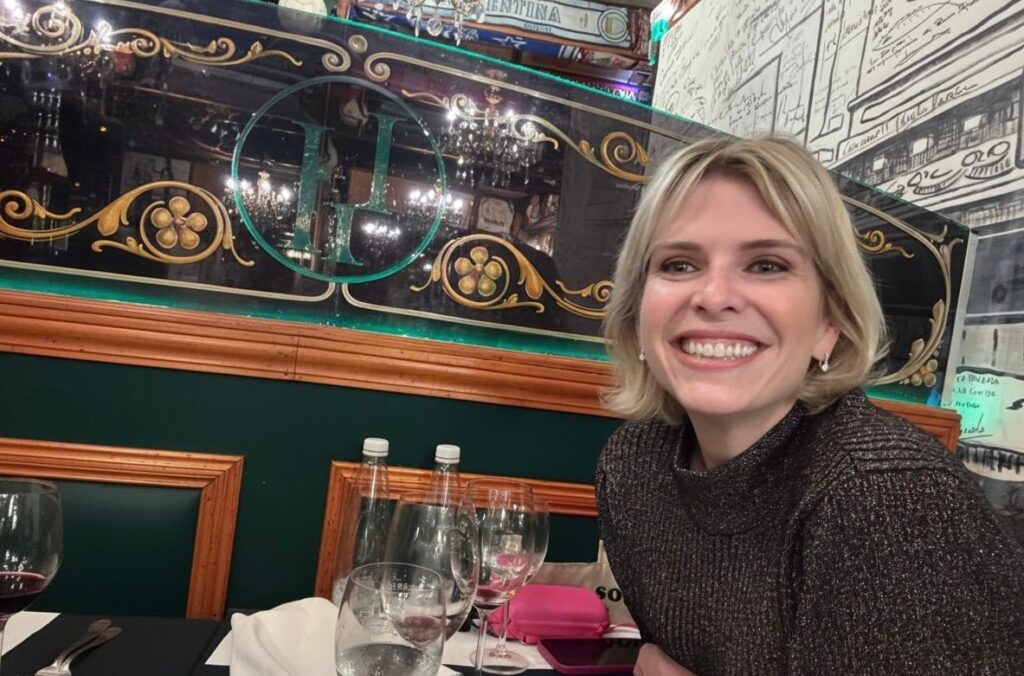
There’s been a lot of talk about Argentina lately.
I’d like to share my take. Not on economics or politics, but on something I’ve come to know well: its people.
When I first started working with Argentina, I didn’t know what to expect. What I found was creativity, honesty, and a kind of grounded intelligence that’s hard to put into words.
People who don’t just show up to work — they show up with the intention to improve, to change, to build something meaningful.
People often talk about outsourcing as a cost decision, but for me, it was never just that.
I love Argentina. And if I can work with people who bring creativity, grit, and a sense of calm to every challenge, how could I ever say no?
Today, many of our most important projects are led by incredible professionals from Buenos Aires, Córdoba, and Rosario — people who bring warmth, clarity, and an unshakable sense of purpose.
That spirit has become part of who I am.
You Might also like
-
When Losing a Client Feels Like a Win
I lost a client, and I’m actually happy about it.
Let me explain.
A while back, we placed a fantastic team member with what is now our former client. She did such a great job from day one, showing perfect culture and role fit, that they decided to hire her directly.
Yes, it happens in outsourcing. But here’s what really bothered me: poaching talent doesn’t just break terms. It breaks trust and destroys culture.
I believe the most valuable thing a business owner has is their reputation with clients, suppliers, and teams. Breaking terms sends a signal to that employee and to the rest of the team that shortcuts and small acts of dishonesty are acceptable. In the long run, that erodes trust and damages both the business owner’s and the company’s reputation.
Great cultures are built on respect and integrity.
And if a client shows us they don’t believe in that, then we’re simply not a good fit.Because without values, there is no partnership.
What do you think? Does a little cheating corrode team and company culture?
Post Views: 108 -
You Can’t Build Loyalty With a Tight Fist
Raising Salaries Won’t Fix Your Turnover Problem
I’ve seen companies with sky-high churn, and others paying exactly the same where employees stick around for years.
Both assume that’s just how it is. The struggling ones blame it on the salary, saying they can’t pay enough.
Here’s what I believe: turnover is rarely about the paycheck. It’s almost always about purpose.
When we get a new inquiry and see people leaving in waves, that’s not a pay problem. That’s a culture problem hiding in plain sight.
Often these companies pay well, yet people still leave. Meanwhile, the businesses with the lowest churn have something different in common: their people know why they’re there, because they feel part of something that matters.
I don’t believe people leave companies. They leave bosses and organizations that fail to give their work meaning.
If you want people to stay, you don’t need free kombucha or another salary bump. You need to lead with purpose. And sometimes, the smallest gestures mean the most:
• A thank you when it counts
• A birthday remembered
• A dinner where work doesn’t come upBefore you raise another salary, ask yourself: does each and every team member know why they’re here?
Post Views: 76 -
Leadership That Starts at the Kitchen Table
Marlene Dandler built her company and a community from her kitchen table.
This week, I sat down with Marlene Dandler, founder of Seashore Academy, a fast-growing network of private hybrid schools that started right there — at her kitchen table.
What inspired me most wasn’t just how far she’s come, but how she leads: with clarity, care, and the conviction that great education, and great leadership, both start with human connection.
My three top takeaways:
1️⃣ Hiring for alignment, not background
Marlene explained that her toughest hires were leaders from traditional education, talented people who struggled to embrace Seashore Academy’s flexible hybrid model. What finally worked was finding a leader who shared her excitement for change and innovation.2️⃣ Leadership energy trickles down
She compared leading her company to parenting: when she’s calm, the household, or the business, is calm. Her morning run and prayer aren’t just self-care, they’re her leadership practices.3️⃣ Culture travels through connection
She keeps her on-site and remote teams united through short daily video huddles and by sharing photos from the classrooms, reminding everyone, even those thousands of miles away, of the joy they’re helping create.Conversations like this remind me how much leadership is about intention — who we hire, how we show up, and how we stay connected across distance.
Grateful to Marlene for sharing her story, her heart, and her wisdom.
Full episode coming soon.
Post Views: 72