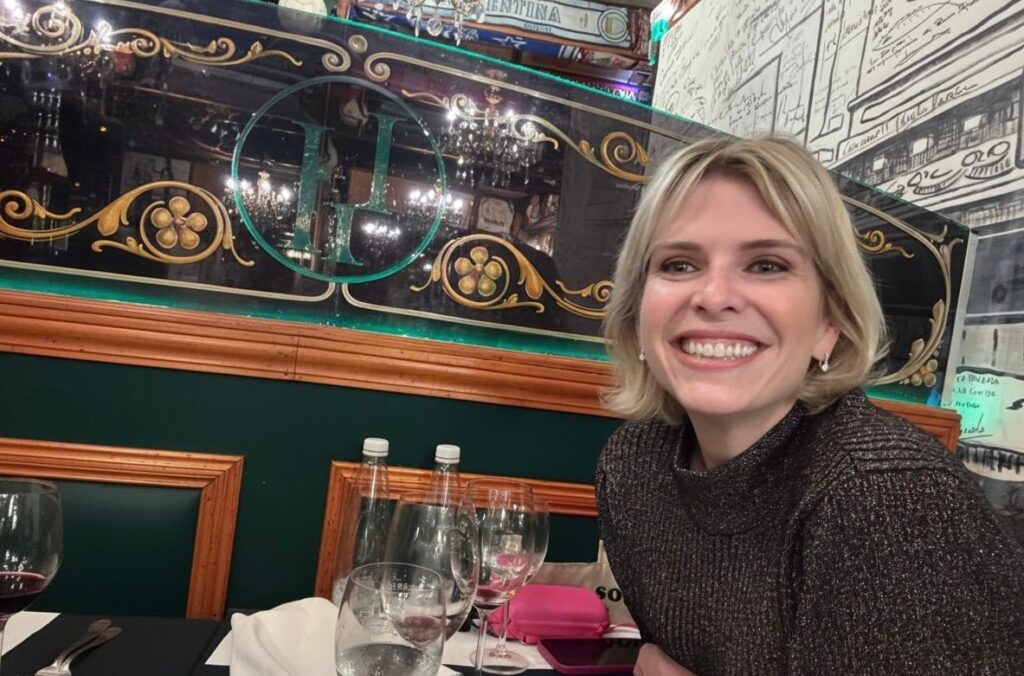
There’s been a lot of talk about Argentina lately.
I’d like to share my take. Not on economics or politics, but on something I’ve come to know well: its people.
When I first started working with Argentina, I didn’t know what to expect. What I found was creativity, honesty, and a kind of grounded intelligence that’s hard to put into words.
People who don’t just show up to work — they show up with the intention to improve, to change, to build something meaningful.
People often talk about outsourcing as a cost decision, but for me, it was never just that.
I love Argentina. And if I can work with people who bring creativity, grit, and a sense of calm to every challenge, how could I ever say no?
Today, many of our most important projects are led by incredible professionals from Buenos Aires, Córdoba, and Rosario — people who bring warmth, clarity, and an unshakable sense of purpose.
That spirit has become part of who I am.
You Might also like
-
When Losing a Client Feels Like a Win
I lost a client, and I’m actually happy about it.
Let me explain.
A while back, we placed a fantastic team member with what is now our former client. She did such a great job from day one, showing perfect culture and role fit, that they decided to hire her directly.
Yes, it happens in outsourcing. But here’s what really bothered me: poaching talent doesn’t just break terms. It breaks trust and destroys culture.
I believe the most valuable thing a business owner has is their reputation with clients, suppliers, and teams. Breaking terms sends a signal to that employee and to the rest of the team that shortcuts and small acts of dishonesty are acceptable. In the long run, that erodes trust and damages both the business owner’s and the company’s reputation.
Great cultures are built on respect and integrity.
And if a client shows us they don’t believe in that, then we’re simply not a good fit.Because without values, there is no partnership.
What do you think? Does a little cheating corrode team and company culture?
Post Views: 265 -
The Art (and Science) of Hiring in 2025
Over the past 24 years, I’ve read thousands of resumes, interviewed hundreds of people, and hired across multiple companies. I thought I had a ton of experience — until I met Cecilia and Victoria. I’m in awe.
Why? Because Cecilia and Victoria are true experts at sourcing new team members. The other day, I did a quick calculation: between them, it’s easily over 40,000 interviews throughout their careers. That’s an incredible amount of experience.
And I’m not saying this because they are part of my team, but because I’ve seen firsthand how much hiring has changed over the past 24 months — more than it did in the previous 24 years. Hiring hasn’t gotten easier. Quite the opposite.
I think this is one of the biggest challenges small companies face today: finding the right people in a sea of opportunities. Getting hiring right determines the success of any business. Get it right, and the business grows. Get it wrong, and it stagnates.
Here are three timeless techniques Cecilia and Victoria use when interviewing candidates after scanning thousands of applications:
1. Details that hurt
Anyone can talk about wins. The real test is whether they can tell the story behind them in vivid detail — what really happened, who was involved, and what the friction was. They even ask small things like what the weather was like during a specific event to test authenticity.2. Process over polish
They ask candidates to walk through how they did something, step by step. Real experience is a little messy. Made-up experience sounds like bullet points. They look for the small missteps and corrections that prove genuine experience.3. The pause
Real memory makes people stop and think. Over-rehearsed answers don’t. When on a video interview, do the eyes move slightly as they recall, or do they stay fixed? That’s a subtle but powerful signal.These are fundamentals in a hiring process that has only gotten more complex in recent months. But they remain the foundation — even in a world of a thousand resumes and AI-polished applications.
Post Views: 164 -
Leading with Love: Lessons from Elizabeth Garvish
I just recorded a podcast with Elizabeth Garvish, founder of Garvish Immigration Law Group, LLC.
Her story reminded me how much leadership is about trusting people we can’t always see and choosing what Elizabeth calls “love.” In practice, that means leading with empathy, trust, and courage, even when leading from afar.
Elizabeth runs a fully distributed team with lawyers and staff across the United States, Spain, Argentina, Colombia, and Honduras.
Her goal is simple yet powerful: to build the happiest law firm in America.
My top three takeaways:
1️⃣ Love as a leadership system
Elizabeth doesn’t lead with rules; she leads with trust. Her team works globally, across time zones and cultures, connected not by oversight but by shared values.2️⃣ Flexibility as a gift, especially for working mothers
Her firm is built around women, many of them mothers, who can choose how and where they work. She proved that flexibility doesn’t have to reduce performance.3️⃣ Structure makes freedom possible
Behind the idea of “love” is solid structure: EOS meetings, SOPs in Trainual, and remote systems that make clarity the default. It’s a vivid reminder that this is how culture scales beyond the office.For me, this conversation reinforced that remote leadership requires a different set of skills, approaches, and practices—and that it absolutely works. When trust, support, and clarity are part of the system, teams don’t just function remotely; they thrive.
Grateful to Elizabeth for sharing her vision of what leading with love looks like in the real world.
Full episode coming soon. 💫
Post Views: 211